
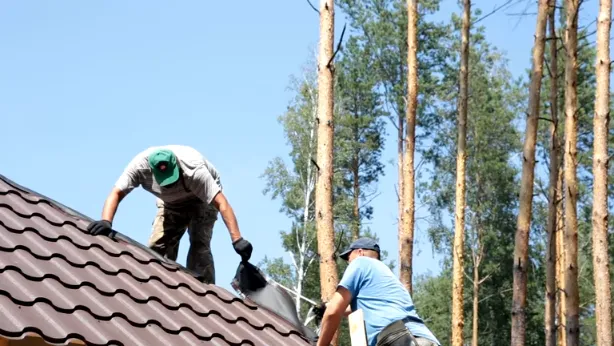
Behavior of Butyl Tape Seal in Metal Roof Assemblies
How Butyl Tape Responds to Environmental Stressors
In metal roof assemblies, environmental exposure is constant. One of the standout features of butyl tape sealants is their long term flexibility and resilience. Butyl rubber sealant is primarily made from isobutylene rubber. It maintains its viscoelasticity and sealing properties over the long term, and also possesses excellent weather resistance and waterproofing capabilities. It does not flow at high temperatures and does not crack at low temperatures. This means that the tape will not harden or crack, even under extreme temperature cycling.
Butyl sealants are unaffected by UV rays directly, as they are typically installed beneath metal panels or within joints. However, their formulation plays a role in resisting oxidative degradation. Because it remains flexible throughout its lifespan, it has excellent conformability to the thermal expansion and contraction and mechanical deformation of the bonded surfaces, making it a relatively advanced waterproof sealing material. This quality is crucial for maintaining performance across years of service life.
Influence of Surface Conditions on Seal Integrity
No matter how advanced a sealant is, surface preparation is essential. Before use, please remove any water, oil, dust, or other contaminants from the surface of the materials to be bonded. Clean, dry, and oil free surfaces help achieve maximum adhesion.
Butyl tape sealants like QKD Tape’s KJ-656 and KJ-671 series show excellent compatibility with coated metals, galvanized steel, and aluminum panels. Surface roughness also plays a role — smoother substrates promote better initial tack, while slightly textured surfaces may enhance mechanical interlock.
Effects of Compression and Bond Line Thickness
Uniform compression across joints ensures full contact and a continuous seal. Inconsistent pressure can lead to voids or squeeze out, both of which compromise the performance. The bond line thickness must be adequate to allow flexibility without overstressing the adhesive. For roofing assemblies, butyl tape’s viscoelastic nature helps balance these factors effectively.
Key Factors Affecting Performance on Metal Roofs
Temperature and Humidity Considerations During Installation
Temperature during application significantly impacts performance. While some tapes require narrow application ranges, a recommended construction temperature of -5°C to 45°C shows that QKD Tape’s tapes are engineered for wide operating conditions (23°F–113°F).
Humidity has minimal effect on pure butyl formulations since they don’t rely on curing chemistry. However, in hybrid systems, elevated moisture could delay full cure. Pre-conditioning tapes in moderate environments simplifies handling in cold or hot climates.
Joint Movement Tolerance in Dynamic Roof Systems
Thermal expansion and contraction are inevitable in metal roof systems. It exhibits excellent conformability to the thermal expansion, contraction, and mechanical deformation of the bonded surfaces. This makes butyl tapes ideal for accommodating joint movements without delamination.
Whether it’s a mechanically fastened or floating system, the butyl tape seal stays intact through repeated cycles. It’s compatible with both low slope and steep slope roofs, making it a flexible sealing solution across various architectural demands.
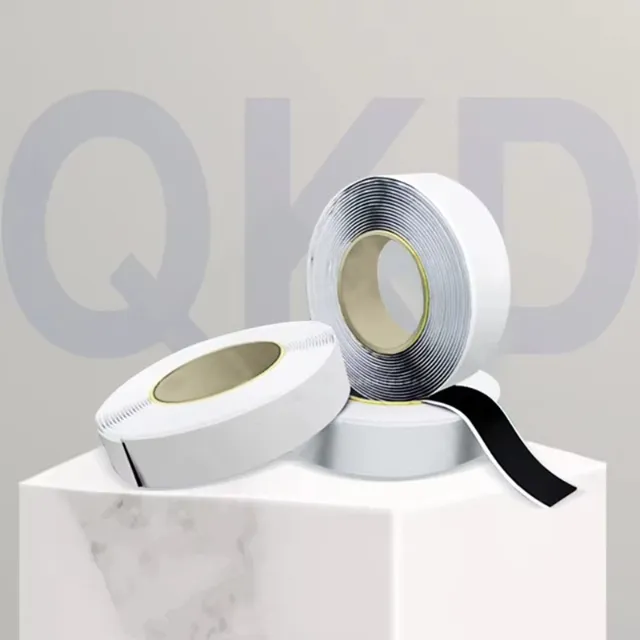
Functional Benefits of Butyl Tape in Roofing Applications
Enhancing Speed and Efficiency During Installation
Installation speed matters on large scale metal roofing projects. Butyl tape sealants come in preformed rolls, which significantly reduce jobsite preparation time when compared to liquid sealants. Uniform roll dimensions provide predictable application coverage, reducing labor time and wastage.
QKD tapes are compatible with both manual and automated assembly lines, ensuring adaptability across different roofing systems.
Protection Against Water Intrusion and Corrosive Agents
The primary function of a butyl tape sealant is waterproofing. It excels at sealing around fasteners, overlaps, and penetrations. It exhibits strong adhesion to various surface materials and possesses excellent weather resistance, aging resistance, and waterproofing properties. This capability helps prevent moisture ingress that could lead to substrate corrosion over time.
In high exposure zones such as eaves and valleys, a secondary moisture barrier like KJ-671 can provide additional protection against pollutants and atmospheric contaminants.
Long Term Durability Across Harsh Environments
Butyl tape’s long term performance has been validated through field use. Test results showing no flow at 100°C for 2 hours and no cracking at -40°C demonstrate its high thermal stability and low temperature flexibility.
Importantly, QKD’s tapes resist shrinkage and embrittlement even after years of service. They maintain adhesion under cyclic loading from weather fluctuations, which is essential for roofs exposed to seasonal extremes.
Integration with Metal Panel Systems and Fasteners
Compatibility with Mechanically Attached Panel Designs
Roof profiles vary, from standing seams to corrugated panels. QKD Tape’s butyl tapes conform to irregular surfaces without interfering with mechanical fasteners. The viscoelasticity of the tape helps distribute stress evenly along the joint line, reducing the risk of panel fatigue or cracking over time.
The tape’s ability to maintain seal under compression is especially useful in concealed fastener systems where visual inspection isn’t always feasible post installation.
Seam Sealing Strategies for Complex Roof Geometries
Complex transitions such as ridges, valleys, or skylight perimeters require adaptable solutions. Custom tape widths and cross section sizes—such as 2×10 mm, 3×12 mm, or wider formats like 210 mm and 220 mm—can be produced based on customer drawings, making them ideal for tight radii and multi-layered assemblies.
Using dual strip applications at high risk areas enhances redundancy without complicating installation workflows. These tapes are engineered to stay bonded even around curved sections without delamination risk.
Inspection Protocols and Maintenance Considerations
Evaluating Sealant Condition Over Time
Routine inspections should focus on signs like edge lifting, dirt accumulation, or loss of adhesion at seams. Non-destructive tests using peel checks or infrared imaging can help assess continuity without disrupting the assembly.
Reapplication intervals depend on exposure levels and original installation quality, areas with heavy movement or UV load may require earlier interventions.
Repair Techniques Using Butyl Tape for Metal Roof Restoration
When resealing aged joints, surface preparation is key. To achieve the best bonding and waterproofing effect, the surface of the substrate to be bonded should be hard and dense, and the adhesive should ideally be applied and the components installed in a single step. If existing butyl layers are present, they must be cleaned but not necessarily removed if they remain intact.
QKD Tape’s restoration grade tapes provide compatibility with legacy installations. These tapes offer consistent bonding strength even when layered over older substrates.
Selection Criteria for Field Proven Butyl Tapes
Matching Tape Formulation to Application Demands
Different projects demand different characteristics, some require high tack for immediate grip, while others need low permeability for coastal or humid regions. Elongation properties should also be considered when joint movement is expected to be significant.
Balancing Performance with Installation Practicality
Roll length, release liner type, and flexibility are all factors influencing installer preference. Products like QKD Tape’s butyl rolls offer stable unwind force and easy handling across job sites, a huge plus during high volume installations in industrial settings.
Storage stability is also critical: The storage period is 12 months from the date of manufacture. Proper storage maintains performance consistency even months after delivery.
FAQs
Q: What temperature range can QKD butyl tapes withstand?
From -40°C to 100°C without cracking or flowing.
Q: Can butyl tape be used on galvanized steel?
Yes, QKD tapes adhere strongly to galvanized surfaces.
Q: How long does a typical butyl seal last?
When applied correctly, it can last over a decade without degradation.
Q: Is butyl tape compatible with automated roof panel assembly?
Yes, its uniform dimensions support both manual and automated workflows.
Q: Can old joints be resealed without removing the previous tape?
Yes, if the surface is cleaned properly and the old layer remains intact.