
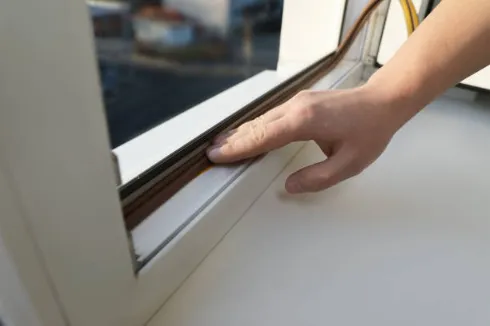
Performance Characteristics of Butyl Based Flashing Tape
Waterproofing Capabilities Across Application Scenarios
Butyl based flashing tapes are engineered to deliver superior waterproofing performance across diverse construction environments. A key advantage is their ability to maintain a watertight seal even under constant moisture exposure.
It has extremely strong adhesion to various material surfaces, and also possesses excellent weather resistance, aging resistance, and waterproofing properties. It provides sealing, shock absorption, and protection to the bonded surfaces. This makes them highly effective in roofing overlaps, siding transitions, and critical window flashing installation zones.
Whether used in vertical joints or horizontal sill pans, butyl tape seals reliably without sagging or delaminating. Test results showing no flow at 100°C for 2 hours and no cracking at -40°C confirm its stability and water resistance under both elevated and sub-zero conditions.
Adhesion Properties on Common Construction Materials
The adhesive strength of butyl tape is one of its defining features. It bonds tenaciously to wood, galvanized metal, concrete, glass, and PVC, demonstrating wide material compatibility that is critical for envelope sealing in mixed-material assemblies.
Even on rough or uneven surfaces, butyl’s self-healing characteristics promote full surface contact. The tape maintains adhesion as substrates expand and contract with temperature shifts, thanks to its permanently non-curing formulation. It remains flexible throughout its lifespan and exhibits excellent conformability to the thermal expansion, contraction, and mechanical deformation of the bonded surfaces.
Durability in Harsh Environmental Conditions
Butyl flashing tapes exhibit excellent resistance to UV exposure, oxidation, and thermal cycling. Performance data showing no flow at elevated temperatures and no cracking down to -40°C demonstrate stability across extreme climatic conditions.
This durability ensures long-term performance without cracking, splitting, or adhesive failure—key for exterior sealing applications that undergo daily thermal cycling.
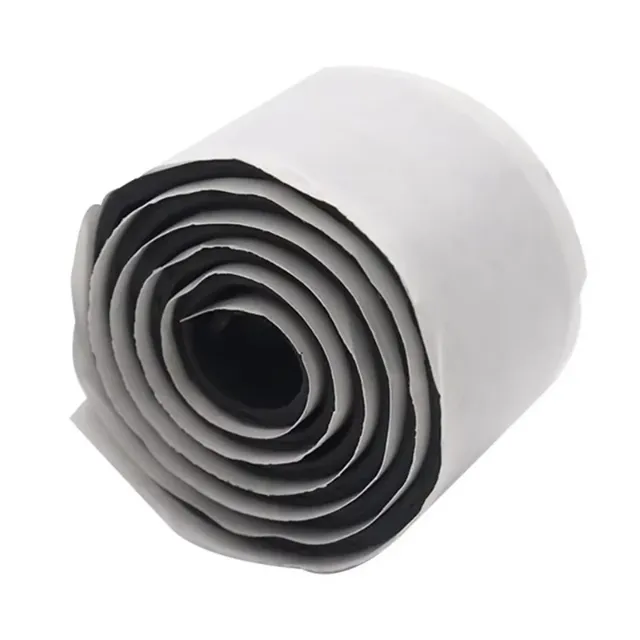
Functional Advantages in Building Envelope Sealing
Air and Vapor Barrier Performance
Butyl tapes are not only about waterproofing—they also play an important role in air sealing. When used as part of a continuous barrier system, they help reduce unwanted air infiltration, which contributes to better thermal regulation inside buildings. This reduction in air leakage boosts HVAC efficiency and minimizes drafts that can affect occupant comfort.
By limiting both air and vapor passage through wall penetrations or window perimeters, these tapes contribute to high-performance envelope assemblies.
Flexibility and Conformability in Complex Geometries
One of the standout traits of butyl tape is its ability to conform tightly around corners, curved transitions, and irregular surfaces. Excellent flexibility and conformability ensure superior sealing performance.
This makes it ideal for detailing around window flashing installation areas where precise coverage is crucial—flanges, sills, and jambs all require intimate contact with the sealant material to prevent leaks.
Long-Term Structural Protection from Moisture Intrusion
Moisture ingress behind cladding or at window-wall interfaces can trigger mold growth, insulation degradation, and even structural rot. Butyl tape’s continuous seal prevents this damage over time. It effectively blocks water transmission, even under prolonged exposure.
By protecting framing members and interior materials from decay, butyl-based solutions extend the life of the entire building envelope.
Installation Benefits for Construction Professionals
Ease of Application Without Specialized Tools
For builders and contractors, speed and simplicity matter. Butyl flashing tape comes in a peel-and-stick format that doesn’t require primers or heat guns. The construction process is very convenient. Simply peel off the release paper, stick it along the desired path, and press it firmly.
This also makes it viable for both new builds and retrofit window flashing installation projects where on-site adjustments are frequent.
Compatibility with Other Building Envelope Materials
Compatibility between layers is critical in modern wall assemblies. Butyl tapes integrate smoothly with house wraps, rigid insulation boards, sheathing membranes, and commercial sealants without compromising chemical performance over time.It contains absolutely no solvents, so it won’t shrink or release toxic fumes. reduces concerns around VOCs or material degradation due to solvent attack.
This makes butyl-based flashing tape a dependable component in multi-layer air/water barrier systems.
Comparative Advantages Over Asphalt-Based Alternatives
| Feature | Butyl Tape | Asphalt-Based Tape |
| Flexibility at Low Temp | Remains elastic below -40°C | Can become brittle |
| Thermal Stability | No flow at 100°C | May soften or slump |
| Odor and Cleanliness | Low odor, non-staining | Often sticky and smelly |
| Dynamic Performance | Excellent conformability | Limited flexibility |
| Primer Requirement | Often none | Usually required |
Butyl flashing tapes outperform asphalt-based alternatives in longevity and clean handling. Performance data showing no flow at high temperatures, no cracking at low temperatures, and non-toxic, odorless, non-corrosive properties validate their superior material behavior under load and stress conditions.
They also leave minimal residue during installation—a small detail that makes a big difference on fast-paced job sites.
Role of Butyl Tape in Window Flashing Installation Systems
Sealing Window Perimeters Against Air and Water Infiltration
Creating airtight seals around window units is essential to achieving water resistance and energy efficiency. Butyl tape establishes continuous seals around flanges, sill pans, and other vulnerable transitions. This prevents moisture ingress at points where windows meet framing or cladding.
By blocking both air and water pathways at these junctions, butyl tape serves as a critical element in high-performance window flashing installation strategies.
Supporting Code Compliance for High Performance Envelopes
With rising demands for energy-efficient construction, continuity of air barriers is now a code requirement in many regions. Butyl flashing tapes support this by maintaining airtightness across penetrations and edges. Their vapor-impermeable nature also helps meet standards related to moisture control within wall systems.
Thus, they facilitate compliance with green building certifications like LEED and local energy codes without complicating the install process.
Integration of Butyl Tape Solutions from Industry Leaders
Application Versatility Across Sectors with QKD Tape Products
QKD Tape’s portfolio of butyl-based sealing products addresses needs across multiple industries—including automotive, electronics, packaging, and construction sectors.
Their tapes are specifically engineered for compatibility with modern construction materials like coated steel panels, aluminum frames, PC sheets, and glass—delivering strong adhesion regardless of substrate.
Contribution to High-Specification Projects Through Innovation
QKD Tape’s product development emphasizes long-term adhesion stability under environmental stressors. This commitment has earned them trust among builders managing complex or high-performance sealing applications.
Professionals seeking dependable outcomes for window flashing installation or façade detailing turn to QKD solutions for their combination of quality and ease of use.
FAQ
Q: What makes butyl tape better than asphalt tape for flashing?
Butyl tape maintains flexibility in extreme temperatures and has cleaner handling with no sticky residue or strong odors.
Q: Can butyl based flashing tape be used on concrete or metal surfaces?
Yes, it adheres well to wood, metal, PVC, concrete, and more without primers.
Q: Is butyl tape suitable for both vertical and horizontal applications?
Absolutely—it resists sagging on verticals and conforms well to horizontal surfaces like sills.
Q: How does butyl tape perform in cold weather?
It remains flexible at temperatures as low as -40°C without cracking or becoming brittle.
Q: Do QKD Tape products comply with industry environmental standards?
Yes, QKD products meet VOC limits and do not emit harmful gases due to their solvent-free formulation.