
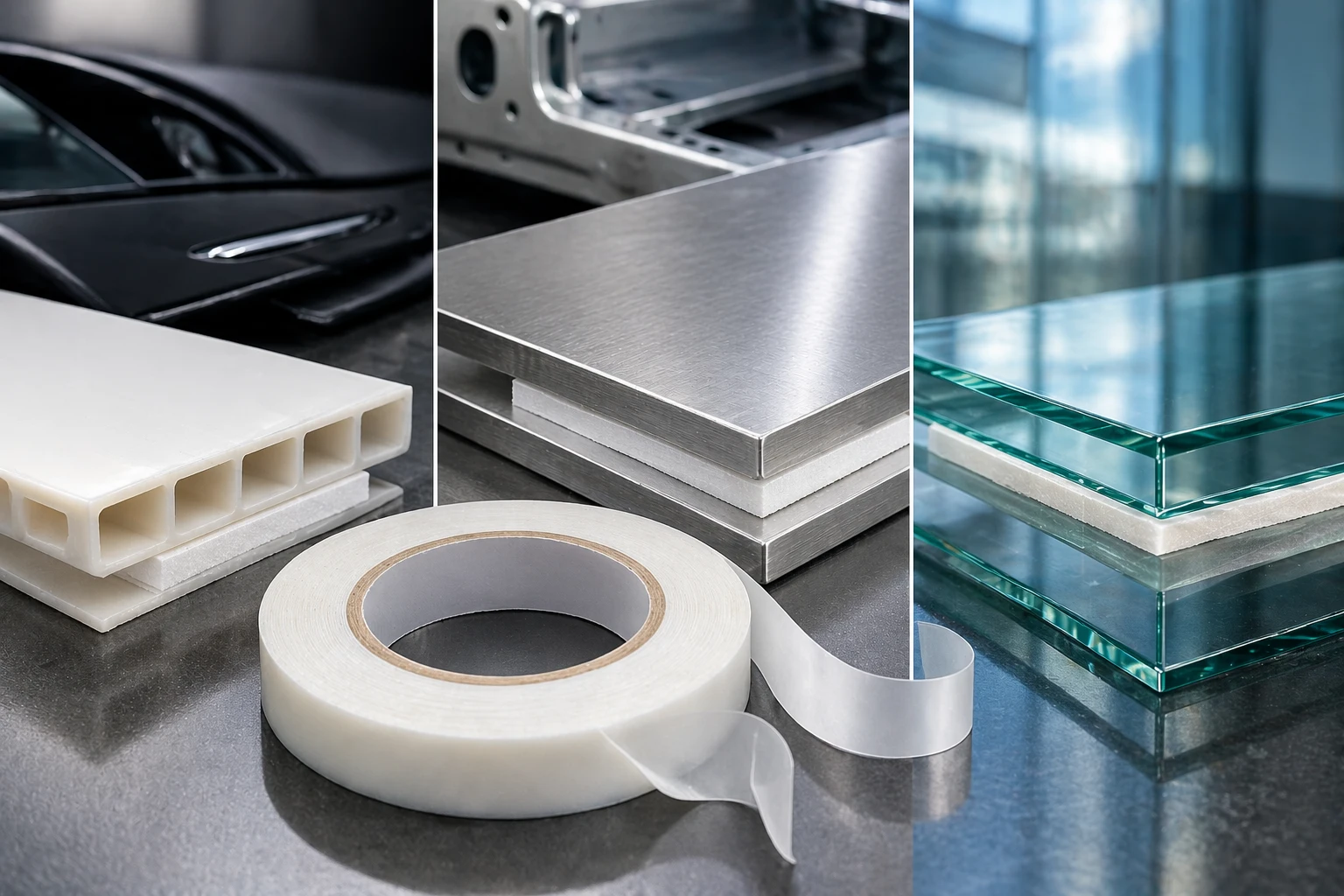
Finding the best double-sided tape for plastic, metal, and glass bonding starts with grasping how various surfaces act. The proper tape doesn’t merely stick materials in place. It delivers reliable results even amid heat, pressure, or shakes. Folks in fields like car making, building work, or gadget assembly often turn to tough double-sided tape. They use it to skip screws or glues while keeping solid hold and neat looks.
What Is Double-Sided Tape?
Double-sided tape features sticky stuff on both sides of a backing sheet. It forms a connection between two items. At the same time, it stays hidden from view. This makes them great for sticking on, layering, or closing tasks.
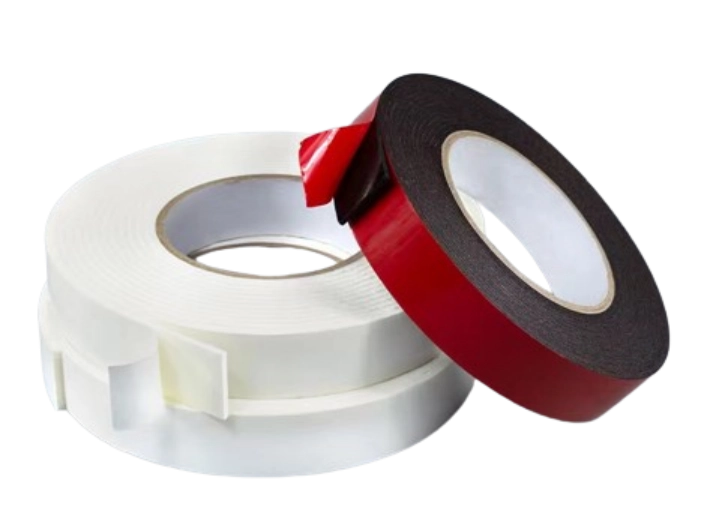
Tough versions for industry often use foam, paper, PET film, or acrylic backings. They pair with touch-activated glues. Each setup affects bendiness and lasting power.
Why Choose Double-Sided Tape for Industrial Applications
Its big draw is the tidy end result and robust grip. It skips obvious fasteners. Plus, it cuts down setup time. Sectors like car wire bundle building, packing lines, and home decor count on these tapes for exact sticking.
Take screws or rivets. Double-sided tape spreads force evenly over areas. It skips harm from drilling holes. It also swaps out liquid glues that need drying periods. Those often make a mess when you put them on.
Key Factors to Consider When Choosing Double-Sided Tape
Picking the correct sticky goes beyond just strength scores. You need to think about surface kind, weather factors, and ongoing results. All these play a part.
Surface Compatibility and Material Type
Every surface holds its own stickiness level. That impacts how well it grabs. Plastics such as polypropylene (PP) show low stickiness. They push back against bonds unless you treat them or match with unique glues. Metals bond easier. But they demand spotless surfaces without oil or rust. Glass calls for keeping clear looks after you take it off.
Surface roughness counts too. Bumpy ones may gain from foam tapes. Those fill tiny spaces. For good prep, do this:
- Clean with isopropyl alcohol to clear grease.
- Make sure it’s fully dry before you stick.
- Add primer if dealing with low-stick plastics.
Adhesive Strength and Durability
Glues mainly fall into three types:
| Adhesive Type | Key Features | Ideal Use |
| Acrylic | High temperature & UV resistance | Long-term outdoor use |
| Rubber | Quick tack & flexibility | Indoor bonding on rough plastics |
| Silicone | Excellent chemical & heat resistance | Electronics or high-temp machinery |
Heat changes and dampness can soften grip as time passes. For tough spots like car panels or metal parts under shakes, pick heavy-duty double-sided tape.
Environmental Resistance and Application Conditions
Outside jobs require UV steadiness and water hold. Inside ones might stress hold under pull or ease of removal. For example:
- Pick acrylic foam tapes for sun hit.
- Go with rubber glues in steady inside spots.
- Match the glue’s heat range to your work area.
Choosing the Right Double-Sided Tape for Plastic Bonding
Sticking plastic brings its own hurdles. This stems from how its surfaces work.
Challenges of Bonding Plastic Surfaces
Lots of plastics, including PP, PE, PVC, and ABS, have neutral molecule setups. These block standard glues from spreading well. Their low surface energy hinders strong links without upfront fixes like flame or air blast treatment.
Recommended Tape Types for Plastic Applications
Acrylic double-sided tapes work fine on even plastics. They hold up under strain and heat shifts. Rubber glues fit bendy plastics. There, quick stick matters most.
For best outcomes:
- Lightly scratch shiny spots to boost hold.
- Don’t touch sticky sides when you set it.
- Let it set at room temp before adding weight.
Selecting Double-Sided Tape for Metal Bonding
Metal-to-metal links often handle push or heat swings. So, tape choice must weigh these loads.
Understanding Metal Surface Characteristics
Raw metals like aluminum or steel grab tight once you clear oil bits. Painted or covered metals need match checks. Coatings can cut initial stick. Always wipe with solvents to remove grease before using any tough sticky tape.
Suitable Tape Options for Metal Applications
Heavy-duty double-sided tape gives frame-level power. It’s fit for supports or panel builds. In hot areas, such as engine bays, acrylic foam tapes handle growth cycles. They avoid peeling apart. QKD Tape’s double-sided acrylic foam tape for Industrial & Home Use shows how smart mixes bring bend and heat toughness in car and machine uses.
You often see it attaching badges on cars, holding metal edges in building fronts, or locking parts in gadget cases. Screws don’t fit there.
Effective Double-Sided Tape Solutions for Glass Bonding
Glass needs to keep its see-through quality. It also requires solid stick. That’s a tough mix when looks are key.
The Nature of Glass Surfaces in Adhesion Processes
Glass feels sleek and airtight. So, small air pockets can spoil the view. Leftover gunk when you remove it poses problems too. This hits decor panels or screens where style matches use.
Best Two-Sided Tapes for Glass Surfaces
Clear acrylic foam tapes keep see-through while padding against jolts. They’re a top two sided tape for glass signs or walls hit by sun. UV-proof glues stop turning yellow outside.
To skip soft areas:
- Press evenly with a roller.
- Begin at one side to squeeze out caught air.
- Keep the setup spot free of dust for sharp views.
Practical Tips for Applying Double-Sided Tape Correctly
Top glues flop if you apply them wrong. Skill counts as much as the item itself.
Surface Preparation Techniques
Clean stands first: wipe dust with no-lint cloths. Thoroughly degrease metal pieces. For hard bases like polyethylene, use bond boosters from makers. They help links form.
Application Methods for Stronger Bonds
Push hard over the full touch zone. Use rollers, not fingers, for even press. Give enough wait time, usually 24 hours. Do this before stressing the join. Skip shifting once stuck. That breaks early grip and cuts hold strength.
QKD Tape’s Industrial Adhesive Solutions for Multiple Materials
QKD Tape is built on a foundation of quality, reputation, and robust R&D and development, producing a variety of high-strength products, including PVC tape, masking tape, PET film tape, and fiberglass reinforced tape. It also offers a full range of double-sided tapes, such as foam, acrylic, and paper-backed types, suitable for various applications.
Why Choose QKD Tape as Your Adhesive Partner
Our ISO9001:2015 certified production guarantees steady quality checks all through making. Our strong quality control system sits in every part of our work. With over 200 custom adhesive formulas from deep R&D work, R&D team developed over 200 adhesive tape formulations tailored for automotive batteries, cable harnesses, and noise reduction applications., QKD Tape backs wide field needs. From car build lines to exact gadget making.
Buyers gain from OEM/ODM tailor services. These let tweaks in thickness or glue kinds per project wants. We offer OEM&ODM and sampling services to allow clients to evaluate and test our tapes in real-world applications.. Tech advice makes sure right picks. Whether sticking plastic sides in user gadgets or holding glass walls under outside weather.
Contact QKD Tape today to find the right double-sided tape for your application, get expert material-matching advice, and request a custom adhesive solution.
FAQs
Q1: What type of double-sided tape works best on metal?
Heavy-duty acrylic foam tapes are ideal since they resist heat cycles common in metal structures while maintaining strong shear strength.
Q2: Can I use the same two sided tape for glass indoors and outdoors?
Not always. Outdoor setups need UV-resistant clear acrylic adhesives that won’t yellow under sunlight exposure.
Q3: How do I improve adhesion on low-energy plastics like polypropylene?
Use primers designed specifically for PP/PE surfaces before applying rubber-based double-sided tapes.
Q4: What causes double-sided tape failure over time?
Improper surface cleaning or exposure beyond rated temperature/humidity limits often leads to weakened bonds.
Q5: Is heavy duty double sided tape reusable?
No. Once removed it loses structural integrity due to stretched adhesive layers. It’s meant for permanent installations only.