
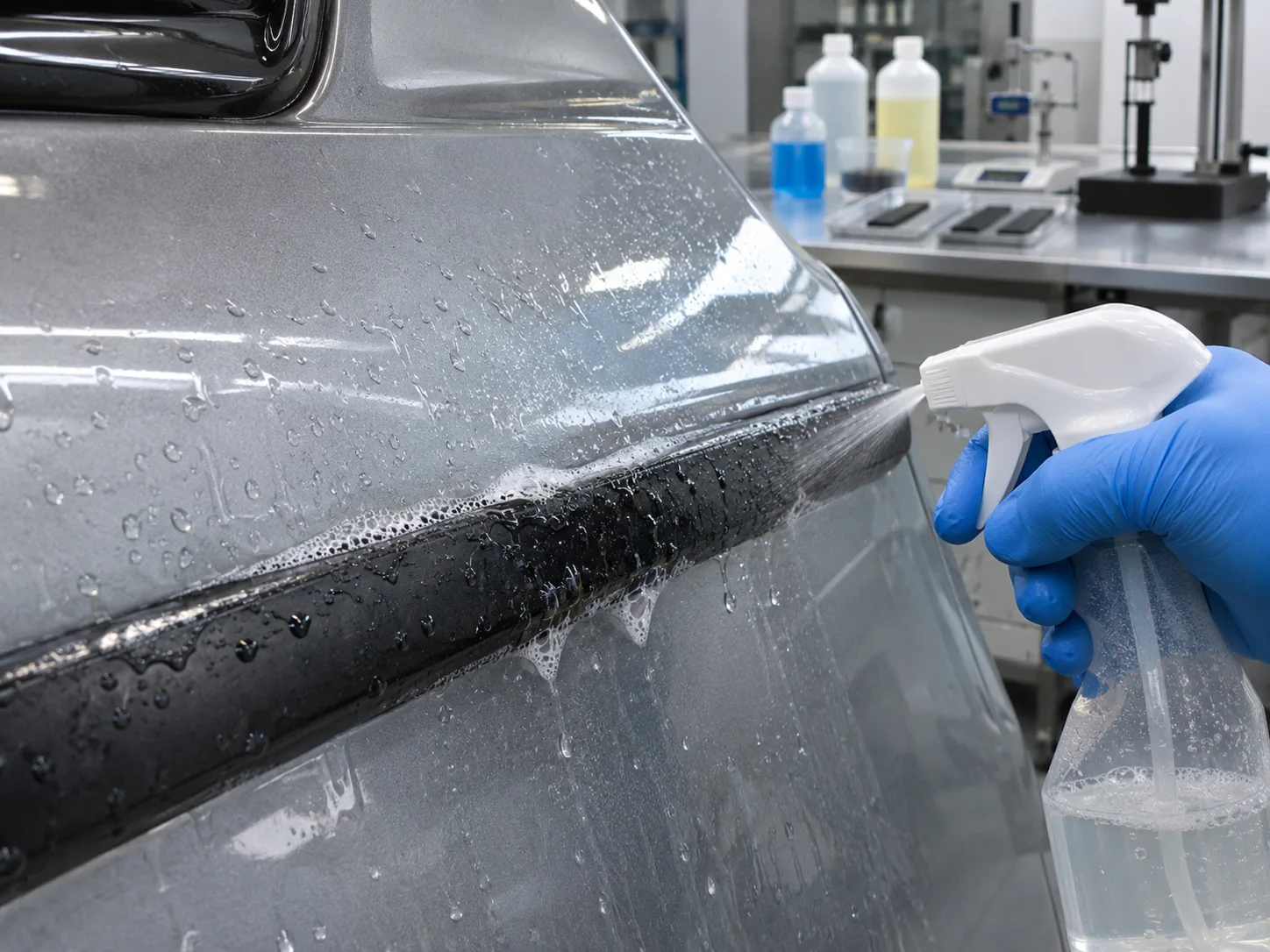
Repeated exposure of a trim part to the same cleaner has to be considered. How diluted is the cleaning solution, and how long is it left on the surface? Automotive tape chemical resistance testing simulates the cleaning routine of a car wash in order to determine the risk of detaching a bonded assembly. Appearance does not necessarily indicate remaining adhesion.
Why Chemical Resistance Matters for Automotive Tape
Exposure to Repeated Cleaning Chemicals
Test the repeated washing of a bond several times. For example, exterior bonds are exposed to shampoos, degreasers, wheel cleaners and waxes during washing of a car. Water can penetrate into exposed trim edges, but after washing the area will be dried.
Potential Problems Caused by Chemical Exposure
Inadequate chemical resistance can cause various kinds of problems such as adhesive degradation, edge lift-off, backing degradation and reduction of bond strength. Some chemical agents soften, swell, crack or even change the color of the adhesive tape. The extent to which a chemical agent changes the tape depends on various factors.
Which Car Wash Chemicals Should Be Included in the Test?
1. Car Wash Shampoos and Detergents
The test begins with the normal car wash shampoo that is used for cleaning a car in the regular maintenance routine.
2. Alkaline Cleaners and Degreasers
Grease removers, which are commonly used for removing oil and grease, must also be tested for compatibility with the adhesive. The compatibility of different grease removers can vary greatly.
3. Acidic Wheel Cleaners
Wheel cleaners can be tested, if they are coming into contact with the bonded part, in the form of spray or runoff.
4. Wax, Sealants, and Protective Coatings
Check for any residue left by cleaning products around edges after use of cleaning solutions. If a coating treatment has been applied prior to bonding, check that surface preparation has removed any contamination from the surface.
Test using actual commercial cleaning products. Note pH, concentration, recommended dilution, and contact time for each test solution. Note that “category of cleaning solution” (e.g. surfactants) does not imply that all solutions within that category are compatible.
How to Test Automotive Tape Against Car Wash Chemicals
Step 1. Select the Right Automotive Tape and Substrates
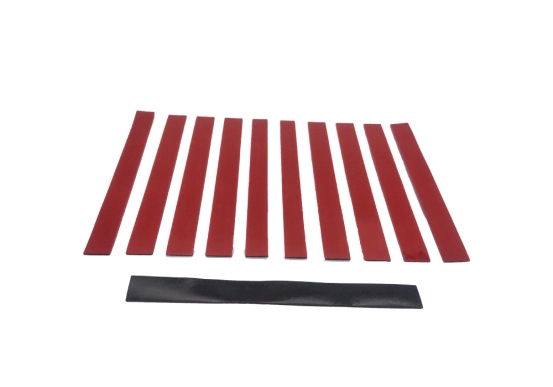
This test is usually performed with the complete tape, on different types of surfaces (painted metal, aluminum, ABS and other production plastics). The test for harness tape is performed by winding the tape around cable specimens. The test attempts to reproduce production conditions: surface cleaning, application pressure and the time allowed for the bond to develop. The test specimens are prepared in replication and then split into corresponding numbers of specimens to be tested as baseline specimens, to be aged as untreated specimens and to be exposed to water and to different chemicals respectively.
Step 2. Prepare the Car Wash Chemical Solutions
Prepare solutions according to label instructions and record the solution name, batch number, mixing ratio, pH and temperature for each solution. Keep the solutions separate from each other. Keep water-only specimens separate and expose them on the same schedule.
Step 3. Apply Chemical Exposure
So, don’t confuse intermittent spraying with prolonged immersion. Include wiping with a wetted cloth where appropriate. Define contact times, cycle counts and spray or wiping conditions. We need to replicate the cleaning, rinsing and drying of the part in repeated cycles, each consisting of the application of the solution to the tape, of the rinsing off of the solution and of the drying off of the water.
Step 4. Rinse and Dry the Samples
Rinse as in service, dry under controlled conditions and use the same recovery time for all groups of test specimens. For documentation, photograph the same location before testing and after each cycle.
Step 5. Compare Performance Before and After Testing
In order to measure adhesion and shear holding time on the tape samples which have been exposed to chemicals and on corresponding control samples, always using the same test method and same test parameters, first the initial adhesion has to be measured on additional “baseline” test samples. These samples are destroyed in the subsequent peeling test. The place of failure as well as the recorded force are to be noted.
What to Inspect After Chemical Exposure
1. Adhesive Appearance
Examine the tape for discoloration, swelling, blistering, oozing of adhesive, etc. Take before and after test photos of the same area of the tape on the test specimen.
2. Tape Backing Integrity
Examine the tape’s backing for signs of cracking, edge distortion, delamination or loss of flexibility. Consider the possibility of failure of adhesive to backing which would not cause failure at the bonded surface.
3. Edge Lifting and Bonding Failure
Record the extent of edge lifting. Is this failure at the bond of tape to sample (adhesive failure) or within the adhesive itself (cohesive failure)? Also record any tearing of surrounding foam.
4. Adhesion Strength Retention
Calculate retention using comparable peel measurements:
Adhesion Retention (%) = (Post-test Adhesion / Initial Adhesion) × 100
For calculating the degree of adhesion loss compare the results obtained for the test specimens with those for corresponding untreated control specimens which have been left to age for the same time. Allow for the degree of adhesion loss which is acceptable from your own company’s viewpoint and from that of your customer. For automotive applications refer to OEM specifications for relevant parts. One retention percentage will not suit every tape.
Which Test Standards Can Support the Evaluation?
ASTM D3330/D3330M – Peel Adhesion Testing
Test adhesion (Peel test) on tape and sample before test, and after test as mentioned above. State which test method was used to measure adhesion before test and after test with any relevant modifications.
ASTM D3654/D3654M – Shear Adhesion Testing
Record holding time under constant load parallel to the bond. Keep the load and bonded area consistent.
ASTM D543 and ISO 175 – Chemical Resistance References
ASTM D543 deals with tests for chemicals on plastics, and ISO 175 deals with immersion tests for solid plastics, excluding cellular materials. These standards do not provide dedicated car wash tape certification. Special test methods will have to be selected depending on the type of tape, its expected use, and its exposure.
Choosing the Right QKD Tape for Automotive Applications
Double-Sided Acrylic Foam Tape
A double-sided acrylic foam tape is also of interest for mounting trim parts. The adhesion as well as the resistance to moisture and weathering has to be tested with the cleaners used for washing, on the surfaces to be bonded and within the respective temperature limits of application.
PET and PVC Automotive Wiring Harness Tape
For cable protection, choose PET cloth wire harness tape or PVC wire harness tape. Depending on the material of the cables, the backing as well as the adhesives have to match accordingly and have to be able to withstand possible contact with chemicals.
Customized Automotive Adhesive Solutions
For your OEM/ODM QKD Tape production, we are happy to provide you with samples made to your specifications (dimensions, backing material, adhesive properties etc.).
Common Mistakes to Avoid When Testing Automotive Tape
- Testing the adhesive alone instead of the complete tape.
- Testing with undiluted cleaner when it is to be used diluted.
- Skipping repeated exposure and wet-dry cycles.
- Approving appearance without measuring adhesion retention.
- Applying identical criteria to every material and installation.
Conclusion
When testing bondability, we are happy to send you samples of our tapes for trials such as mountings, harness wrapping etc. For customized samples, contact QKD Tape with your substrates and cleaning agents.
Frequently Asked Questions
Can Car Wash Chemicals Damage Automotive Tape?
Yes, QKD Tape can be damaged by cleaning agents. The extent of the damage depends on the type and composition of the cleaner, the concentration, the contact time and the type of QKD Tape used. Tests are best carried out with the actual car wash cleaner.
How Often Should Automotive Tape Be Tested for Chemical Resistance?
Test automotive adhesive tape during your development phase and validate with your customers. After changing materials, suppliers or cleaners, repeat testing as outlined in your quality requirements.
Is Acrylic Foam Tape Suitable for Automotive Exterior Applications?
Even exterior types must be checked for compatibility with specific cleaners and wash chemicals.