
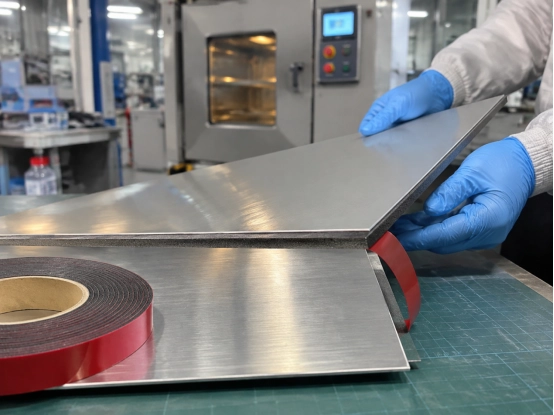
A possible problem with bonded panels is for a newly mounted panel to fit within its framing perfectly but, some hours later, after a hot day, one corner to lift. The adhesive may still feel sticky. The joint may not have accommodated the thermal movement of the panels. Acrylic foam tape gives panel bonding solutions a flexible layer that can accommodate some relative movement, provided the whole joint is designed for it.
Why Thermal Expansion Matters in Panel Bonding
Understanding Thermal Expansion in Different Materials
The coefficient of thermal expansion (CTE) describes dimensional change with temperature: steel generally has a lower CTE than aluminum, glass has a low CTE, while many plastics have a higher CTE than aluminum. However, the actual CTE for specific grades of material must be checked.
Why It Matters for Bonded Panels
When joining two dissimilar materials together (e.g. aluminum and plastic) they will expand and contract at different rates with temperature change. This uneven expansion and contraction causes shear in the adhesive which can result in a bowing panel between fixing points lifting at the edges with resulting peel to the bond.
What Happens When Panels Expand and Contract?
As the joint expands the surface of the joint may start to lift off. The first sign of failure will generally be at the corners of the joints.
A panel can remain attached while bowing between fixing points, but repeated cycling of expansion and contraction can ultimately degrade the joint over time.
Using fixings that allow movement, or modifying the trim to allow for some panel movement can prevent a variety of problems that occur with joints that have nowhere to move. In many cases, simply increasing the adhesive strength of the tape will not solve these joint related problems.
How Acrylic Foam Tape Handles Thermal Expansion in Panels
1. Viscoelastic Properties Allow Flexible Movement
The acrylic foam core of the foam tape is viscoelastic, combining an elastic response with deformation that depends on time. As a result, the foam tape also helps relieve stresses that occur due to thermal expansion and contraction of the bonded panel. The material can even creep under constant load.
2. Even Stress Distribution Across the Bond Line
It disperses forces across the adhered surface as opposed to focusing stress at screw holes (as in bolting). As noted, unevenness is possible at joints’ ends.
3. Foam Thickness Helps Accommodate Material Differences
A thicker layer of acrylic foam exhibits less shear strain for the same amount of sideways displacement than a thinner one. It is also better at following small surface irregularities.
4. Reliable Bonding Between Dissimilar Materials
Even aluminum and plastic, metal and composite materials can be bonded together. This works very well using a compatible adhesive and proper surface preparation. The foam layer also has a dampening effect for vibrations and contact noise.
Where Acrylic Foam Tape Is Used for Panel Bonding
Automotive Panels and Exterior Trim
For automotive application such as mounting and bonding of plastic trim to metal, test the joint against painted surfaces. Allow some movement at ends of trim and test for vibration on vehicle.
Building and Architectural Panels
In building decoration allow for some clearance between panels. Exterior cladding requires an engineered attachment system to deal with the loads and exposure it faces.
Electronic and Industrial Enclosures
Another consideration when selecting a tape for fascia panel mounting, is the local temperature, plus the weight of the panel.
How to Choose the Right Acrylic Foam Tape for Panels
Consider the Substrate Materials
It is important to note the actual substrate materials and surface finishes that will be in contact with each side of the joint. Some of the low surface energy materials will require the use of special adhesives, potentially with surface treatment.
Select the Appropriate Tape Thickness
Determine the joint gap from the design, calculate the relative thermal movement and compare with the proposed tape thickness against the allowable deformation under imposed loads.
Evaluate Temperature Resistance
Are short peaks or continuous service temperatures anticipated? In addition to bond surfaces, special consideration must also be given to other areas behind the panel, including areas exposed to sunlight. For outdoor use, also special attention must be given to joints regarding moisture and UV exposure.
Check Adhesion and Shear Performance
Peel adhesion (measured in N/25.4mm) is not necessarily an indication of a tape’s ability to support load. When testing for shear resistance it is far better to apply the tape to the assembled panel and then test under load. Also test through the expected service temperatures, including repeated heating and cooling.
Best Practices for Reliable Panel Bonding
Surface must be free from oil and dirt. Recommended cleaning methods must be used for the specific surface and allowed to dry prior to application of the tape.
Apply the taped joint to the surfaces evenly to the required pressure as described in the manufacturers instructions.
Allow for sufficient expansion of the joint and prevent clamping items, such as edging tape or other trim items, from fixating the panel edges together.
Choose the correct type of tape to bond the correct materials, at the correct thicknesses, under the correct loads etc. Also ensure that the tape is suitable for the temperature at which it is to be applied. Allow time for the bond to develop before applying the load.
Conduct a test assembly loaded up and subjected to the appropriate range of temperature changes. Check for slip, bowing or edge lift after cooling down.
Allowing movement does not prevent the panel materials themselves from expanding.
QKD Tape’s Acrylic Foam Tape Solutions for Industrial Panels
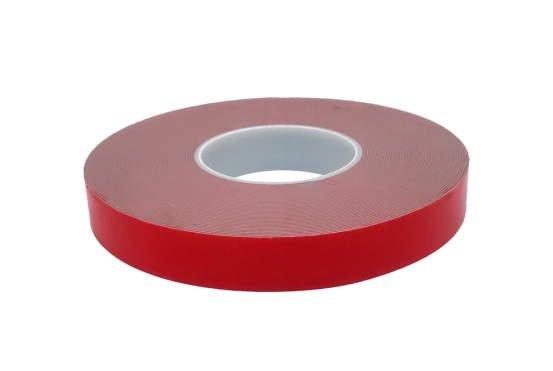
Choose QKD double-sided acrylic foam tape in thicknesses including 0.25mm, 0.5mm, 1mm, 1.5mm and 2mm. QKD-7615 and QKD-7620 have long-term ratings of 80°C and short-term ratings of 140°C. Confirm duration and loading before selection. Provide details of your intended application including drawings of your assembly, information regarding the substrates to be bonded and expected service conditions for OEM/ODM work in the automotive, construction or electronics fields.
Conclusion
Design your joint for expansion and contraction. Test the tape to choose the correct tape for your application. For samples or for OEM/ODM work contact QKD Tape for a trial of your panel materials, dimensions and service temperatures.
Frequently Asked Questions
Can Acrylic Foam Tape Handle Thermal Expansion?
Yes. As the acrylic foam core is a viscoelastic material it allows some degree of movement between the surfaces bonded together. The adhesives on both sides of the foam tape bond the surfaces together which have been prepared for the product.
What Thickness of Acrylic Foam Tape Is Best for Panel Bonding?
Select thickness for the joint gap, panel dimensions, expected movement and sustained load. Joints should allow thermal expansion and contraction. Tape can then be selected from the range and an “as built” test assembly carried out on the user’s panels to confirm suitability.
Is Acrylic Foam Tape Suitable for Outdoor Panel Applications?
Suitable grades of foam tape are available for outdoor use but temperature, UV and moisture resistance must be checked against the conditions that the panel will be exposed to.