
Automotive wire harness abrasion protection tape must be chosen for the movement and contact occurring at each body pass-through. Soft, conformable fleece can control contact noise and moderate rubbing, while a tougher cloth backing is usually more appropriate where the bundle repeatedly touches an edge or bracket. Tape alone is not a substitute for correcting a sharp edge, missing grommet, poor clip position, or insufficient clearance. The protection system must combine the right backing, adhesive, wrap geometry, and route control.
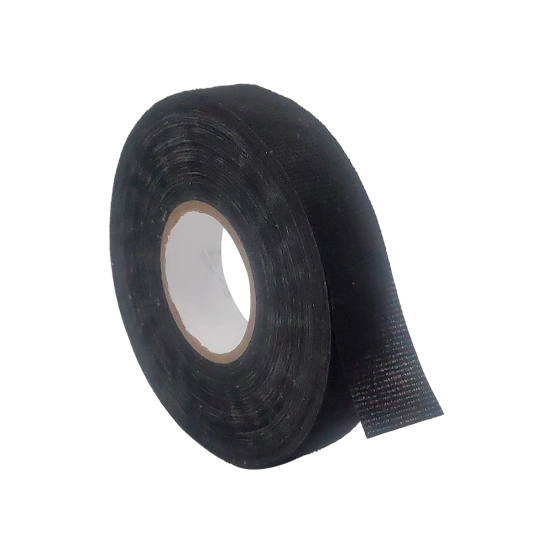
Why Body Pass-Throughs Create Harness Chafe
A harness at a firewall, floor panel, door aperture, seat frame, or metal bracket experiences more than one type of load. Sliding abrasion occurs when the bundle moves across a surface. Fretting occurs when vibration produces small, repeated movements at the same contact point. Point loading concentrates force where the harness touches a narrow edge. Over time, any of these mechanisms can polish, fuzz, cut, or displace the tape backing before the conductor insulation becomes exposed.
The route geometry matters as much as tape performance. A generous clearance can disappear when an engine moves on its mounts, a door cycles, a seat travels, or the assembly expands and contracts with temperature. A clip that permits rotation may also drive the harness toward the smallest panel radius. Dust, metal particles, fluids, or moisture can increase wear or affect adhesion.
For this reason, stronger adhesion is not a complete answer. Excessively tight wrapping can stiffen the bundle, concentrate bending beside the protected zone, or squeeze the harness into the edge. Engineers should identify the motion, load direction, contact material, and required service life before choosing the protective construction.
Match Tape Construction to the Wear Mechanism
Start by dividing the route into functional zones instead of specifying one tape for the entire harness. The backing must tolerate the local contact, while the adhesive must hold during wrapping and remain stable under the zone’s temperature and environmental conditions.
| Contact Zone | Dominant Risk | Useful Tape Characteristics | Design Caution |
| Interior trim or instrument panel | Buzz, squeak, and light rubbing | Soft, conformable surface and noise damping | Do not assume soft fleece is suitable for a sharp metal edge |
| Body hole with a fitted grommet | Local movement and assembly scuffing | Flexible wrap with stable adhesion and good conformability | Tape must not prevent the grommet from seating correctly |
| Bracket or panel-edge proximity | Repeated abrasion and point loading | Tough cloth backing, controlled overlap, and good tear resistance | Remove burrs and control clearance before adding layers |
| Warm electrical zone | Heat exposure plus mechanical contact | Backing and adhesive verified for the program temperature range | A temperature claim does not prove abrasion performance |
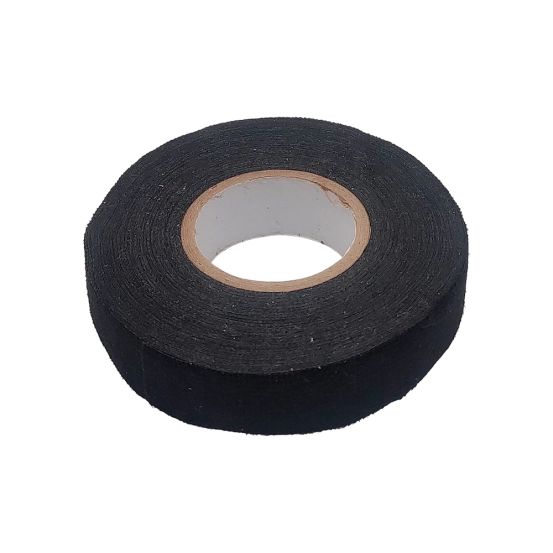
A PET fleece harness tape is a practical candidate for vibration damping and noise-sensitive interior routing. Where the dominant risk is mechanical wear, PET cloth wire harness tape provides a different backing structure to evaluate. QKD Tape also describes its acetate cloth tape for flame-retardant electrical insulation and thermal protection; use it only when those documented characteristics and the application test plan match the zone.
These are selection directions, not automatic substitutions. Final material approval should use the actual substrate, harness diameter, bend radius, temperature profile, fluid exposure, and vehicle-level test requirements.
Apply the Wrap Without Creating a New Failure
Application begins before the tape touches the bundle. Remove contamination that could interfere with adhesion, confirm that the panel edge is deburred, and verify that the grommet or edge protector is fully seated. Mark a protected length that extends beyond the expected contact zone so normal tolerance and movement cannot place bare harness wrap against the edge.
- Start on a straight section before the risk zone, avoiding a connector branch or the tightest bend.
- Wrap with consistent, moderate tension. Do not stretch the tape simply to reduce its apparent diameter.
- Maintain the specified overlap while following the bundle without wrinkles or open channels.
- Finish beyond the contact zone and place the termination away from the highest-motion surface.
- Reinstall clips and grommets, then check clearance through the complete component movement.
For an illustrative 50% overlap, each turn advances by half the tape width. A 19 mm tape therefore advances approximately 9.5 mm per turn on a straight bundle. That relationship helps estimate consumption and coverage, but it does not establish the correct overlap for every route. Tight bends, branch points, large diameter changes, and severe abrasion may require a different drawing requirement or another protective component.
When standard dimensions or constructions do not fit the routing envelope, custom tape solutions can be evaluated against the required width, backing, adhesive, and conversion format.
Validate the Assembly at the Vehicle Level
A wrapped sample that looks correct on a bench can still fail after installation. Begin with a static build review: confirm the harness is not pinched, the grommet is seated, the connector is not carrying harness weight, and the taped section covers the complete tolerance stack. Inspect the route from both sides of the pass-through when access permits.
Next, reproduce the expected movement. Cycle doors, seats, pedals, steering components, powertrain movement, or service operations that can shift the bundle. Look for tape polishing, wrinkling, displacement, lifted ends, cut fibers, or a change in harness position. Temperature and humidity exposure should reflect the program environment because they can alter adhesive response and bundle stiffness. If the zone can encounter water, oils, cleaners, or road contamination, include the relevant exposure rather than relying on a dry abrasion screen.
Finally, examine the underlying insulation after the planned test interval and confirm electrical continuity where the program requires it. A material screening test can compare candidates, but only the approved assembly-level test can validate the final routing, fastening, and protection system. Record the tape lot, application tension method, overlap, protected length, and installation condition so results can be reproduced.
FAQ
The following questions address common decisions that arise when detailing protection at a pass-through.
Can Fleece Tape Replace a Protective Conduit at a Body Pass-Through?
Not automatically. Fleece tape can reduce surface noise and moderate contact, but a conduit, grommet, sleeve, or molded protector may still be necessary for severe edges, positive stand-off, or drawing-controlled protection.
Should the Tape Joint Face the Panel Edge?
Avoid placing the termination at the highest-motion contact point. A lifted or raised tape end can become a snag or wear initiator, so orient and secure it in a lower-stress area.
How Much Overlap Is Needed on a Harness Wrap?
Fifty percent is a useful calculation example, not a universal requirement. Select the overlap from the tape width, bundle diameter, bend radius, movement, coverage length, and approved process specification.
When Is Acetate Cloth Tape a Better Fit?
Evaluate acetate cloth tape when its documented electrical insulation, flame-retardant, and thermal characteristics suit the zone. The vehicle program must still verify its mechanical and environmental performance in the completed assembly.
Specify the Next Validation Step
Move from a general tape category to a reviewable specification by defining the harness diameter, pass-through or bracket geometry, edge radius, substrate materials, movement direction, temperature range, contaminants, overlap, and required protected length. Include photos or a marked routing drawing if possible. You can send us the routing drawing and operating conditions to discuss candidate constructions, sample formats, and the validation work needed before production approval.