

Introduction: Why Foam Density and Thickness Matter
Double-sided foam tape can hold a trim part, absorb vibration or seal a small gap. Its success depends on more than adhesive tack. Foam density and thickness control how the tape supports load, follows a curve and stays stable over time.
The correct specification depends on the substrates, load and service environment. QKD Tape supports foam tape selection for production conditions.
How Foam Density Affects Tape Performance
Density describes how much material is packed into the foam. It changes compression, flexibility and support.
Bonding Strength and Load Capacity
High-density foam usually resists compression better. It gives a mounted part more support under shear. Automotive emblems, cable guides and small control panels often benefit from this structure.
Low-density foam compresses easily. Under a constant load it may deform and reduce contact pressure. That can allow an edge to lift. For lighter parts, however, the same softness can improve contact on uneven surfaces.
Bonding area matters. A wider strip can distribute load more effectively.
Flexibility and Conformability
Lower-density foam bends around curves and follows minor surface variation. This helps on an appliance bezel or a wire bundle routed around a corner.
Higher-density foam feels more stable during application and is less likely to buckle. Soft foam conforms better; firm foam supports better.
Compression and Recovery
High-density grades generally recover with less permanent set after compression. They suit joints that are clamped or repeatedly loaded.
Lower-density grades absorb shock and reduce rattling. In packaging or equipment assembly, that can protect delicate surfaces. If the tape stays compressed for months, recovery may be incomplete. Test the actual load and dwell time.
Temperature and Durability
Heat can accelerate creep. Cold can reduce flexibility. Density plays a role, but adhesive chemistry and liner choice matter as well.
An exterior sign may need an acrylic system. QKD Tape can review temperature and chemical exposure before production release.
How Foam Thickness Affects Tape Performance
Thickness is the distance between the two adhesive faces. It determines how much the tape can move and how well it fills a gap.
Gap Filling and Surface Irregularities
Thicker foam bridges small gaps and compensates for uneven substrates. A bowed decorative panel or stamped metal frame can still achieve broad adhesive contact.
Thin foam suits precise fits. Electronic bezels and nameplates often need a low profile so covers remain aligned. Excess thickness can create a visible step or interfere with clips.
Vibration and Shock Absorption
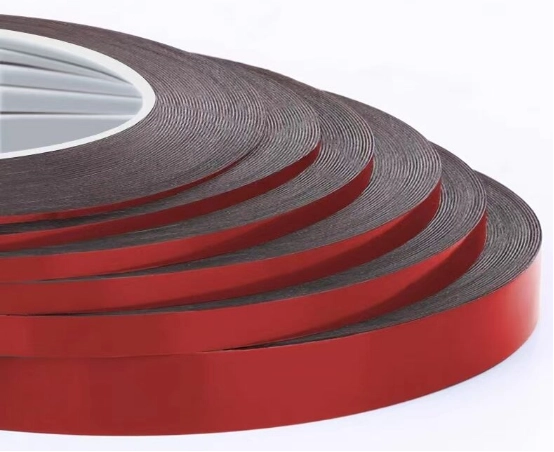
A thicker carrier provides more cushioning between dissimilar materials. It can reduce squeaks in a vehicle or rattling between a plastic cover and metal chassis.
More thickness is not automatically better. A heavy part on soft, thick tape may shift during handling and create peel stress at the edge.
Bonding Area and Stability
A conformable tape can wet out a rough surface where a thin tape leaves air pockets. On a smooth surface, a thinner construction may deliver a more stable assembly height.
Width matters. A wider strip spreads load and reduces stress concentration. During trials, check cut width, pressure and dwell time.
Appearance and Design Requirements
Designers may want a hidden bond line. Thin black foam can disappear behind a trim edge. Building and signage applications may value gap filling and weather resistance more. Color, liner release and die-cut shape can be customized through double-sided tape solutions.
Density vs. Thickness: Which Factor Should You Prioritize?
Density mainly changes support, compression resistance and long-term stability. Thickness mainly changes conformity, cushioning and gap filling.
A heavy automotive trim part may need medium or high density with moderate thickness. A curved electronic component may need lower density and a thin profile. An uneven wall panel may need high density with more thickness. Protective packaging often benefits from soft, thick foam.
Equal thickness does not mean equal performance. Foam and adhesive systems differ.
How to Choose the Right Double-Sided Foam Tape
1. Identify the substrates
List every surface in the joint. Powder-coated metal, ABS plastic, glass and rubber do not accept adhesive in the same way. Low-energy plastics may need a specialized adhesive or primer.
2. Measure the load and bonding area
Record component weight, contact area and force direction. Shear, peel and tension place different demands on the tape.
3. Check the surface condition
Roughness, curvature, dust and oil affect wet-out. Cleaning and application pressure are part of the bonding system.
4. Define environmental requirements
Set the temperature range and include humidity, UV exposure, solvents and cycling. A short indoor test cannot predict every outdoor failure.
5. Select density and thickness
Choose density for support and recovery. Choose thickness for conformity and movement. Confirm that the combination fits the assembly tolerance.
6. Test before mass production
Run peel and shear tests with the actual substrates. Add heat aging, humidity and vibration testing where relevant. A sample from an industrial tape manufacturer can expose handling issues before tooling is committed.
Common Applications Across Industries
- Automotive: emblems, trim, cable routing and interior components
- Electronics and electrical: displays, battery components, nameplates and insulation
- Packaging and assembly: mounting, cushioning and component positioning
- Building and decoration: panels, signs, mirrors and decorative profiles
- Industrial manufacturing: machine parts, labels, seals and vibration control
For wire routing, wire harness tape can be combined with foam mounting points.
Why Work with QKD Tape?
QKD Tape serves manufacturers that need repeatable industrial adhesive tape supply. The range includes PVC tape, wire harness tape, double-sided tape, PET tape, masking tape and fiberglass tape.
OEM and ODM projects can be developed around a drawing, sample part or process requirement. Options include foam type, adhesive grade, thickness, width, roll length and die-cut shape. Technical support covers substrate selection and production trials.
Share the substrates, load, dimensions and operating conditions with the engineering team. Request a tape sample before a full-volume decision.
Conclusion and Conversion CTA
Foam density controls support and compression behavior. Foam thickness controls conformity, cushioning and gap filling. The right tape matches both to the joint.
Contact QKD Tape with the substrates, required thickness, width and service conditions. Ask for a recommendation, samples or an OEM/ODM quotation.
FAQ
Q: What foam density is best for heavy components?
Medium or high density is a sound starting point because it resists compression and creep. Bonding area and adhesive type still need testing.
Q: Is thicker double-sided foam tape always stronger?
No. Thickness can improve gap filling and cushioning, but excessive thickness may increase movement and peel stress.
Q: Which foam tape works on curved surfaces?
Lower-density PE, EVA or PU foam often conforms well to curves. Check the surface energy and curvature with a sample.
Q: Can QKD Tape make custom foam tape sizes?
Yes. QKD Tape can discuss custom thickness, width, roll length and die-cut formats for OEM and ODM production.
Q: How should foam tape be tested before production?
Use the actual substrates and application process. Check peel, shear, temperature aging and vibration when those conditions exist in service.