
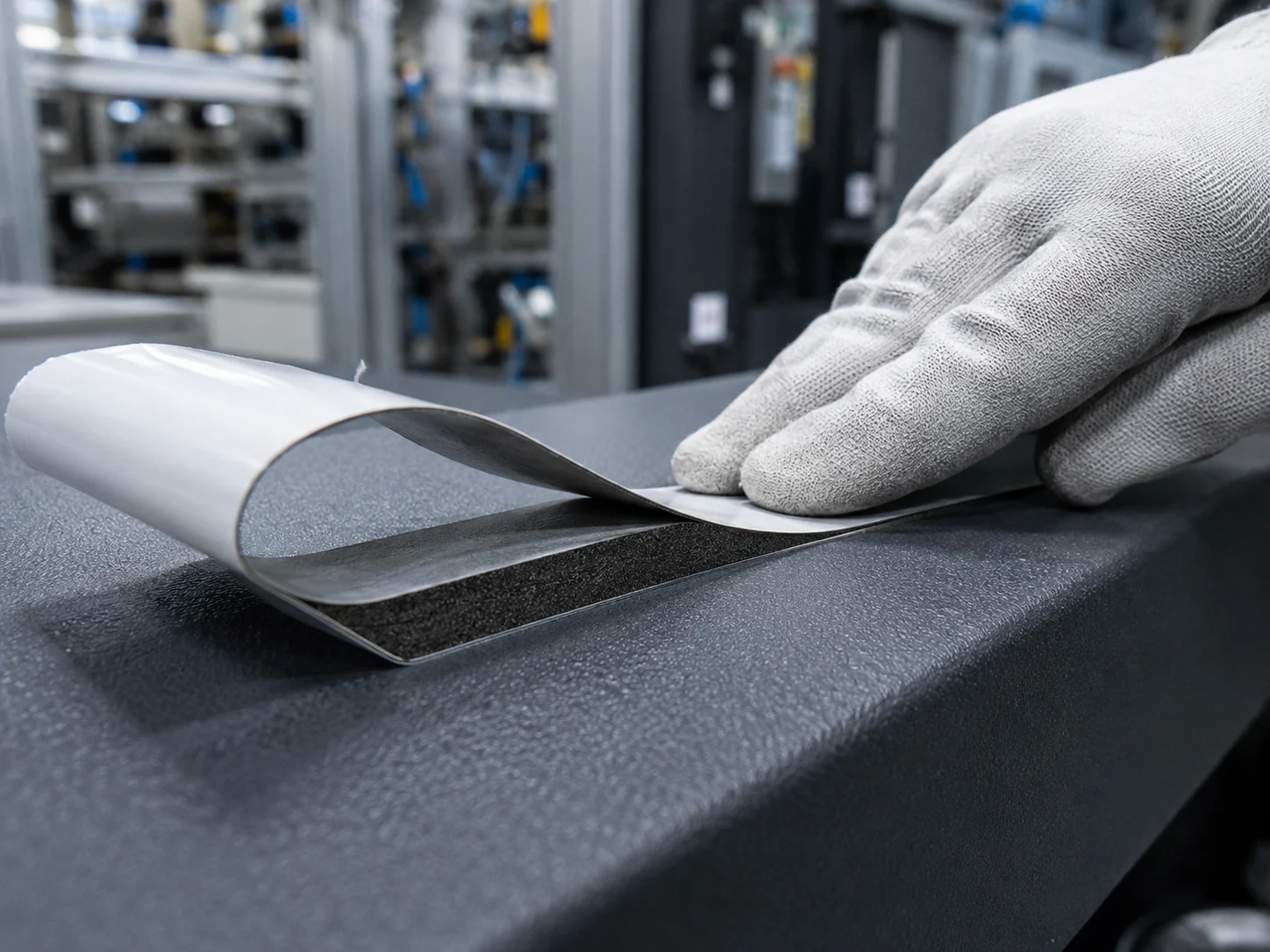
Powder coated metal often seems simple to join. It feels clean, hard, and mostly flat. Yet a tape can hold firm at first. Then it may start to lift later. This happens after heat builds up, vibration shakes it, or days pass with steady pressure.
The best pick comes down to the coating feel, the glue type, how thick it is, the daily conditions, and how you put it on. Real tests on the actual coated piece count far more than any top peel number from a sheet.
Why Is Powder Coated Metal Difficult to Bond?
The tape sticks to the powder coating. It does not reach the metal underneath. A smooth layer gives solid contact. A rough one leaves the glue touching just the high spots. Polyester, epoxy, hybrid, and polyurethane coatings can react in different ways to one tape.
Waxes, silicone parts, extra spray dust, and marks from handling can cut down good contact. At times the coating gives way first. If a peel test pulls the coating off the panel, then the link from coating to metal is the weak spot.
What Factors Should You Evaluate Before Selecting the Tape?
Selection gets simpler once you know the surface, the setting, and the other material.
What Type of Powder Coated Surface Is Involved?
Check whether the finish is smooth, lightly textured, or heavily textured. Note the coating chemistry, age, gloss level, and whether the part will be used indoors or outdoors.
Smooth coatings often accept thin carrier tapes. Rough finishes usually need a conformable adhesive or foam carrier. Fresh coatings should be fully cured before testing.
What Conditions Will the Bond Face?
Record service temperature, humidity, UV exposure, chemicals, vibration, and expected life.
Load direction matters. A tape may resist a quick hand pull yet creep under continuous shear. This is common on vertically mounted badges, brackets, and panels inside warm equipment cabinets.
What Materials Are Being Joined?
The second material may be ABS, PP, rubber, foam, glass, or painted metal. A tape that bonds well to powder coating may still perform poorly on low surface energy plastic. A differential tape may solve difficult combinations.
Which Double Sided Tape Construction Works Best?
Tape construction controls conformability, bond line thickness, stress distribution, and converting performance.
| Tape construction | Main advantage | Best suited for | Main limitation |
| Thin PET carrier tape | Stable and easy to die cut | Smooth panels and light parts | Limited gap filling |
| Tissue or nonwoven tape | Flexible and economical | Indoor assembly | Lower structural strength |
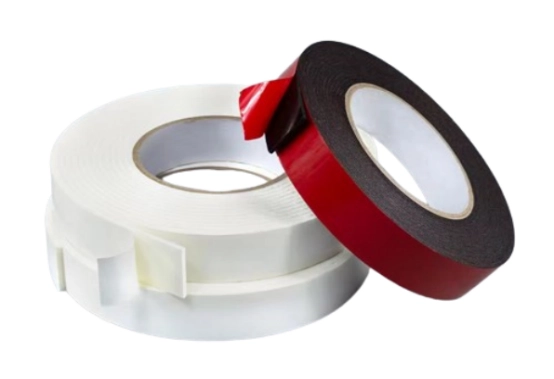
| PE or acrylic foam tape | Conforms and distributes stress | Texture and vibration | Higher thickness and cost |
| Transfer adhesive tape | Very thin bond line | Smooth laminating work | Weak on rough surfaces |
Acrylic adhesive is usually preferred for outdoor use and higher temperatures. Rubber adhesive gives strong initial tack but generally handles heat and weathering less well. Modified acrylic offers a useful balance.
Thickness may matter more than a higher laboratory peel value. On coarse powder coating, foam tape often performs better because it creates more real contact.
How Should You Match the Tape to the Application?
The application suggests a starting construction. Production testing should make the final decision.
Smooth Indoor Powder Coated Components
Thin PET, tissue, nonwoven, or transfer tapes can work for nameplates, foam pads, and light decorative parts. Avoid narrow bond areas that create constant peel force.
Textured or Uneven Powder Coated Panels
Foam tape is usually more reliable because it compresses into surface irregularities. Typical applications include electrical cabinets, appliances, and machinery covers. Excessively soft foam, however, may allow movement.
Outdoor or High Temperature Applications
Use an acrylic adhesive designed for UV, moisture, and temperature cycling. Check both service temperature and application temperature; they are different limits.
Joint design matters too. Water trapped at the edge or large thermal expansion differences can shorten bond life.
Components Exposed to Vibration
Foam carriers absorb small movements and reduce stress concentration. They suit trim, pads, panels, and lightweight components.
Tape should not compensate for large gaps, unsupported weight, or continuous peel loading.
How Should the Surface Be Prepared Before Tape Application?
Even a good tape fails on dusty or poorly cured coating.
Use a controlled process:
- Confirm that the coating is fully cured.
- Remove dust and visible contamination.
- Clean with a compatible cleaner.
- Let the surface dry completely.
- Apply within the recommended temperature range.
- Press firmly across the full bond area.
- Allow enough dwell time before loading.
Strong solvents may soften or discolor some coatings, so test the cleaner on a hidden area. Primer can help, but only after compatibility testing.
How Can You Test Whether the Tape Is Suitable?
Use actual production parts, preferably from more than one coating batch. Generic steel panel data helps comparison; it does not approve the application.
A practical test plan may include:
- Initial tack
- Peel adhesion after 24, 48, and 72 hours
- Static shear under expected load
- Temperature cycling
- Humidity or water exposure
- Vibration
- Inspection for edge lift or coating separation
Watch the failure mode. Clean adhesive release suggests poor surface interaction. Adhesive splitting indicates cohesive weakness. Coating pulled from the metal points to the coating system.
What Common Selection Mistakes Should You Avoid?
Initial tack is often overvalued. A tape that grabs immediately can still creep in heat or age poorly outdoors.
Other mistakes include testing on bare metal, using thin tape on coarse texture, skipping cleaning, loading too soon, and assuming all powder coatings behave alike.
Two black matte coatings from different suppliers may produce very different results. Peel strength is one data point, not a field performance guarantee.
What Information Should You Give a Tape Manufacturer?
Provide the coating chemistry and texture, both substrate materials, tape dimensions, load direction, component weight, application temperature, service temperature, and indoor or outdoor exposure.
Include the roll or die cut format, expected life, documentation needs, and order volume. Actual coated samples allow the manufacturer to compare constructions on the real surface instead of recommending from a photograph.
Conclusion: Select the Tape Through Testing, Not Assumptions
Smooth indoor surfaces may work with thin PET, tissue, or transfer tapes. Textured, outdoor, or vibration prone parts often need foam carriers and acrylic or modified acrylic adhesives.
Coating quality, tape construction, cleaning, pressure, and dwell time behave as one system. QKD Tape can review the substrate and operating conditions, then provide a suitable construction or custom sample for testing.
Send QKD Tape your powder-coated substrate, component material, dimensions, operating temperature, and service conditions to receive a tape recommendation or custom sample for testing.
FAQ
Q: Can double sided tape stick to powder coated metal?
Yes. Results depend on coating chemistry, texture, cure quality, cleanliness, and tape conformability.
Q: Is foam tape better for textured powder coating?
Usually. Foam fills small surface irregularities and creates more effective contact.
Q: Should powder coated metal be cleaned before applying tape?
Yes. Remove dust, oil, wax, and handling contamination with a compatible cleaner.
Q: How long should the tape dwell before loading?
Many pressure sensitive adhesives continue building strength for 24 to 72 hours.
Q: Can primer improve adhesion?
It can, but primer and coating compatibility should be verified before production use.