
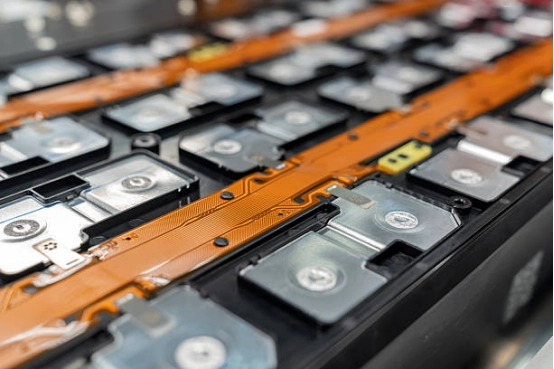
Adhesive tape is a small part of a battery pack or electronic assembly, yet it may insulate an edge, hold a sensor, reduce vibration, or reinforce a module.
The hard part is choosing one that still works after heat, pressure, and aging. A strip that feels strong on the bench can lift inside a warm enclosure. A thin PET tape may insulate well but offer little cushioning. The application decides the construction.
What Functions Do Adhesive Tapes Perform in Battery Packs and Electronic Components?
In battery packs, tape is used between cells, around busbars, over metal edges, beneath sensors, and along cable routes. In electronic assemblies, it may secure foam pads, insulate coils, or protect areas during soldering.
Typical functions include:
- Electrical insulation
- Fixation of cells, sensors, labels, and small parts
- Cushioning against vibration
- Bundling and reinforcement
- Temporary masking and surface protection
- Heat transfer with thermally conductive tape
Tape is useful when a process needs clean application, controlled thickness, and immediate handling. Often it performs two jobs at once.
Which Performance Requirements Matter Most When Selecting Electronic Adhesive Tape?
Initial tack gets too much attention. Long term shear, dielectric performance, and temperature cycling usually matter more.
Dielectric strength should be checked near cells, busbars, transformers, coils, or exposed conductors. The value must be read together with tape thickness and the test method.
Temperature resistance needs context. A tape that survives brief soldering may not suit continuous heat. Battery packs see repeated heating and cooling.
Peel adhesion matters, but it does not predict performance on PP, PE, powder coated metal, or textured housings. Shear strength becomes critical when a mounted component carries continuous load.
Also check chemical resistance, flame requirements, conformability, humidity aging, and residue after removal. “Heat resistant” alone says little.
Which Types of Adhesive Tape Are Best for Battery and Electronics Applications?
No tape type covers every job. Backing, adhesive chemistry, thickness, and reinforcement all change the result.
| Tape type | Typical use | Useful characteristics | Main limitation |
| PET insulation tape | Cells, coils, transformers | Thin, stable, electrically insulating | Limited cushioning |
| Polyimide tape | Soldering and high temperature processing | High short term heat resistance | Higher cost |
| Double-sided acrylic tape | Sensors, labels, foam, housings | Clean mounting, controlled thickness | Substrate sensitive |
| Double sided foam tape | Gap filling and vibration control | Conformable, absorbs movement | Adds thickness |
| Fiberglass filament tape | Bundling and reinforcement | High tensile strength | Not primary insulation |
| Thermally conductive tape | Components and heat sinks | Bonding plus heat transfer | Needs thermal verification |
The same tape family may use different adhesives and coating weights. Those details change line performance.

PET Tape for Electrical Insulation
PET backed tape is widely used where thin insulation and dimensional stability are needed, including transformer coils, battery cell edges, and wire connections.
Its advantage is controlled thickness. In compact assemblies, one extra millimeter can create a fit problem.
Still, PET backing does not guarantee suitable electrical performance. Adhesive type, total thickness, edge coverage, and service temperature remain important.
QKD Tape can provide PET constructions with different thicknesses and adhesive systems. Match dielectric requirements, temperature, and substrate, then test on the real component—not a generic sample.
Double-Sided Tape for Component Mounting
Double–sided tape mounts sensors, foam pads, labels, insulation pieces, and small control parts. Thin films suit precise assemblies; foam versions handle uneven surfaces.
A common failure appears on molded plastic housings. The tape bonds well to metal, then lifts from the plastic side after thermal cycling. Low surface energy, mold release contamination, or movement between different materials is usually involved.
Acrylic adhesive is often selected for aging and heat resistance. Rubber adhesive may offer stronger initial tack but less stability under prolonged heat.
Fiberglass Tape for Reinforcement
Fiberglass filament tape is useful when the job is restraint rather than insulation. It can hold battery modules during handling, reinforce heavy packaging, or stabilize parts before final housing.
Its tensile strength is valuable, but filament tape is not automatically an electrical barrier. QKD Tape’s reinforced constructions should be treated as mechanical reinforcement unless electrical properties are verified.
How Should Buyers Match Tape to a Specific Battery or Electronic Application?
Selection becomes easier when the application is described in plain engineering terms.
- Define the main job: insulation, mounting, cushioning, reinforcement, masking, or heat transfer.
- Record both substrates. “Plastic” is not specific enough; ABS, PC, PP, and PE behave differently.
- Note continuous temperature, short heat peaks, humidity, chemical exposure, and service life.
- Confirm available space, thickness, width, die cut shape, and liner type.
- Identify compliance needs, including RoHS, REACH, flame resistance, or customer tests.
One sensor project used thin double sided film because the drawing allowed almost no compression. The first sample shifted under sustained heat. A higher shear acrylic construction stopped the movement without changing the assembly gap.
What Common Adhesive Tape Failures Should Engineers Avoid?
Most tape failures are quiet. Edges lift. A foam pad creeps by two millimeters. A liner tears during assembly. Residue appears after aging.
Frequent causes include dirty surfaces, low pressure, insufficient dwell time, and the wrong adhesive. Thermal expansion matters too. Aluminum, plastic, foam, and coated steel move differently.
A rigid tape over a curved part may pull itself free. A soft foam tape under constant load may creep. High peel strength does not guarantee high shear, and high tensile strength does not guarantee insulation.
How Can Buyers Validate Adhesive Tape Before Mass Production?
A technical data sheet narrows the options. It does not approve the tape.
Testing should use production materials, not a polished laboratory panel unless that panel matches the real substrate. Samples should be applied with the intended pressure and allowed realistic dwell time.
Useful checks include peel adhesion, static shear, dielectric strength, temperature cycling, humidity aging, chemical exposure, vibration, and residue after removal.
For a QKD Tape sample evaluation, useful input includes substrates, operating temperature, thickness limit, required function, and process. Candidate constructions can then be screened in trial widths or die cut shapes. Judge the result in the assembly, not in the hand.
Conclusion — Which Adhesive Tape Is Best for Your Application?
The suitable tape is the one that addresses the actual failure risk. PET tape handles thin insulation. Double sided film tape mounts precise parts. Foam tape manages gaps and movement. Filament tape provides restraint. Polyimide handles short high temperature processes.
Heat, load, and time expose weak choices. Test there before approving mass production.
Need help selecting tape for a battery pack or electronic component? Provide the substrates, operating temperature, required thickness, application method and expected order volume to receive a suitable tape recommendation or custom sample.
FAQ
Q: Can PET tape be used directly on battery cells?
Yes, when dielectric strength, temperature rating, adhesive compatibility, and thickness meet the cell design requirements. Edge coverage and overlap also need review.
Q: Is acrylic adhesive better than rubber adhesive for electronics?
Acrylic adhesive is usually preferred for long term heat and aging resistance. Rubber adhesive may offer stronger initial tack. The substrate and service condition decide.
Q: What tape works on PP or PE plastic?
These low surface energy plastics often require a specially formulated adhesive, primer, plasma treatment, or another surface preparation method.
Q: Can filament tape replace electrical insulation tape?
Usually not. Filament tape is mainly used for reinforcement. It should serve as insulation only when its electrical properties have been verified.