
Introduction: Why Choosing the Right Tape Matters
A clean sign face looks better without screw heads. The awkward part is choosing what goes behind it. Perhaps there’s half a roll in the van already. It’s sticky enough. Is it the right adhesive, though?
When choosing double sided tape for outdoor sign mounting, we’d start with the back of the sign. What is it made of? What will it touch? We’d also want to know whether it’s tucked inside a doorway or hanging out in the weather.
Why Outdoor Sign Mounting Requires More Than Strong Adhesion
Environmental Challenges for Outdoor Signs
An outdoor bond has a fairly thankless job. Heat makes the panel expand; the wall behind it won’t necessarily move by the same amount. Then there’s moisture at the edges and UV on exposed material. Wind can also work a loose corner back and forth.
The Risks of Choosing the Wrong Tape
A firm tug immediately after fitting proves little about next summer. Edge lifting may start small enough to miss. Once a panel comes loose, someone has to return with access equipment and replace it. Above a walkway, the consequences are more serious.
Which Type of Double-Sided Tape Is Best for Outdoor Signs?
Double-Sided Acrylic Foam Tape
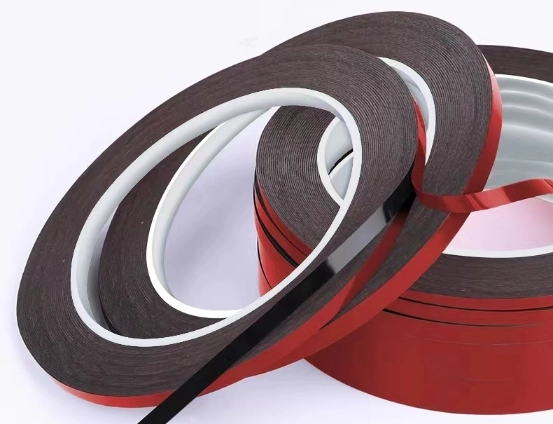
For something you intend to leave up, we’d put double-sided acrylic foam tape on the shortlist. You get some give where the surfaces aren’t perfectly flat. That helps spread stress. The grade still needs UV and moisture resistance, whether you’re joining metal to glass or working with a painted plastic panel.
Here’s one useful comparison: QKD-7650 has a thickness of 0.5 mm against QKD-7610’s 1.0 mm. We specify −20°C to 100°C temperature resistance for each. That doesn’t tell you how heavy a sign either can hold, or whether you can install it on a freezing morning.
Other Double-Sided Foam Tapes
PE and EVA foams offer cushioning. PU and EPDM constructions have their uses too. Don’t order by those letters alone; you still need evidence that the adhesive survives your weather.
Thin Double-Sided Tape
A thin tissue tape might give a light piece the flush fit you want on a smooth backing. I’d still want outdoor test data before leaving it there permanently. A neat fit is only part of the job.
5 Factors to Consider Before Choosing Outdoor Sign Mounting Tape
1. Surface Material and Surface Energy
“Plastic” isn’t enough information for an order. Is it acrylic or PVC? PP and PE can need specialized adhesives because they’re difficult to wet. Paint also changes what you’re bonding to.
2. Sign Size, Weight, and Wind Exposure
Double both sides of a 300 mm square: 0.09 m² becomes 0.36 m². That’s four times the area catching wind. Weight alone won’t settle this; consider orientation and wind loads.
3. Weather and Temperature Conditions
What does this spot get in February? What about August? Include direct sun and driving rain in your enquiry. Check likely surface temperatures, then the permitted temperature for fitting the tape. Those are different questions.
4. Surface Texture and Condition
Run a finger over the backing. Chalky paint or loose oxidation needs attention before bonding. If dust comes away on your hand, stop and deal with that surface.
5. Tape Thickness, Bonding Area, and Service Requirements
More thickness doesn’t automatically buy more strength. How much gap are you accommodating? Is there room for the required tape width and contact area? Mention removal now if the display will change next season.
How to Match Double-Sided Tape to Different Sign Materials
| Sign or Mounting Material | Selection Considerations |
| Aluminum or stainless steel | Try outdoor acrylic foam on a cleaned offcut. |
| Glass | Clean thoroughly, then test the chosen adhesive for the load. |
| Painted or powder-coated metal | Does the paint come off with the tape? That’s a failed trial too. |
| Acrylic or polycarbonate | Check for damage under stress as well as adhesive compatibility. |
| Slightly uneven surfaces | A little foam thickness may reach the low spots. Try a sample. |
These suggestions need a trial. Two panels described as “powder coated” may bond differently. An offcut from your production batch is more useful here than unrelated scrap.
How to Apply Double-Sided Tape for a Reliable Outdoor Sign Bond
Step 1 — Clean and Prepare Both Surfaces
Use a compatible cleaner for dust and oil. Let both surfaces dry. A clean sign back won’t compensate for dirt on the wall.
Step 2 — Check Installation Conditions
Check the application-temperature limits before heading out. Feel the backing for condensation; warm air can be misleading. Wet or frosty? Wait.
Step 3 — Position and Apply the Tape
Mark the alignment. Fit the planned tape layout. Remove the liner without touching the adhesive and apply the specified pressure across the bond.
Step 4 — Allow the Bond to Develop
Don’t schedule loading around when the installer wants to leave. Use the tape’s specified waiting time and any required temporary support. Immediate grip doesn’t mean the bond has finished developing.
Step 5 — Verify the Installation
Look for missed contact and lifting edges. Test a representative assembly for its intended conditions before deployment. For a heavy sign or one above people’s heads, assess mechanical support or secondary retention. Do the same for exposed locations.
Common Mistakes to Avoid When Mounting Outdoor Signs
- Buying by initial tack or an unexplained strength claim.
- Forgetting how wind pulls at the edges of a large panel.
- Fitting tape over dampness without checking material compatibility.
- Assuming another foam tape will behave just like the previous roll.
- Ignoring application instructions because a quick workshop trial felt secure.
“Waterproof” doesn’t settle the mounting question. You’re still depending on whatever sits underneath the tape. I’d rather spend time checking that now than arrange another lift hire because the paint pulled away with the sign.
When Should You Consider a Custom Double-Sided Tape Solution?
One sign with an awkward border is manageable. A hundred identical ones? That’s when we’d discuss a die-cut shape or custom width through OEM/ODM work with our double-sided tape range.
The same conversation helps with unusual substrates or severe weather. Bring dimensions and material details, plus service conditions and lifespan. We’ll discuss samples before a repeat production order.
Conclusion: Choose the Right Tape for Long-Term Outdoor Performance
Have the sign drawing handy? Contact QKD Tape with the materials and mounting details before ordering in bulk. Let’s discuss a grade or custom format you can test on the job.
Frequently Asked Questions
What Is the Best Double-Sided Tape for Outdoor Signs?
We’d try acrylic foam, then narrow down the grade using your material samples.
Can Double-Sided Tape Hold Outdoor Signs in Rain?
Yes, provided the grade suits wet weather. Don’t confuse that with permission to stick it onto a wet wall.
Will Double-Sided Tape Stick to Painted Metal or Plastic Signs?
Often yes. Send the plastic type or a coated sample; “painted metal” leaves quite a lot unanswered.
Can Double-Sided Tape Replace Screws for Outdoor Signs?
Sometimes. We’d need load and exposure details, particularly overhead. The design must also meet applicable safety requirements.