
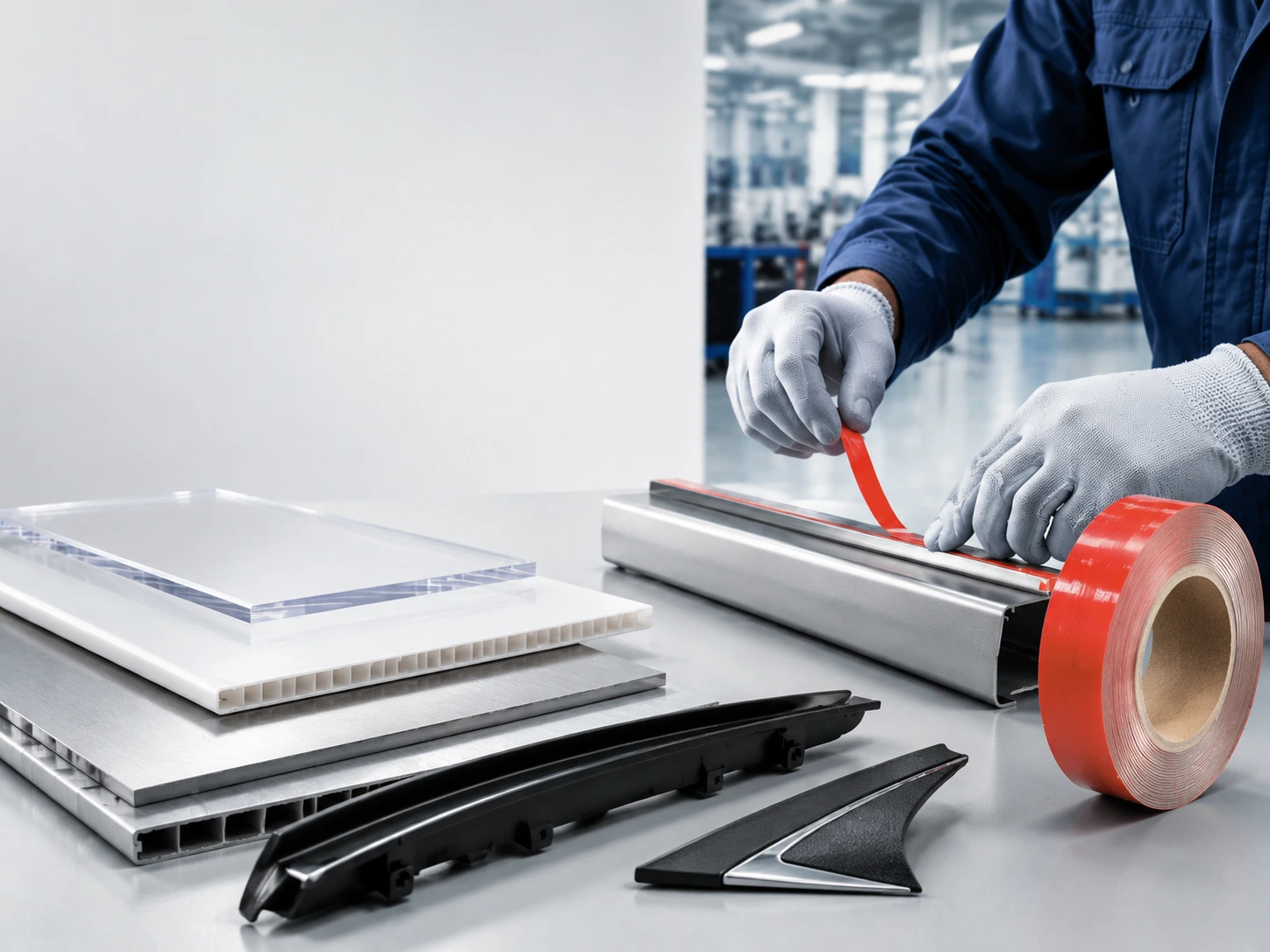
The right double sided tape comes down to one simple question. What materials need to stay bonded? Under what conditions? And for how long? A tape that works well on smooth metal may fail on rough plastic. A thin tissue tape may look clean on a label. But it may not handle vibration on an automotive part. Industrial bonding needs a practical match between surface, adhesive, thickness, strength, and working environment.
Why Double Sided Tape Matters in Industrial Bonding
Double sided tape often looks simple from the outside. But in many factories it solves problems that screws, liquid glue, welding, or rivets cannot handle easily. It can reduce drilling. It can protect product surfaces. It can speed up assembly. And it can create a cleaner finished appearance.
Start with the Bonding Surface
Most bonding failures begin with the surface, not the tape.
Smooth Surfaces
Smooth materials such as glass, painted metal, acrylic panels, aluminum sheets, and coated boards usually allow better contact between the tape and the substrate. Since the tape can touch more of the surface, thin double sided tape, PET tape, or acrylic adhesive tape may perform well.
Rough or Uneven Surfaces
Wood, textured plastic, fabric, foam, powder-coated metal, and uneven construction materials do not give the adhesive full contact. Foam double sided tape is often a better option here. It can fill small gaps. It can absorb surface irregularities. It also helps reduce vibration and stress between two bonded parts.
Low Surface Energy Plastics
Some plastics are more difficult to bond. PE, PP, and certain coated plastic materials fall into this group. Many standard tapes do not grip these surfaces well. You may see the tape stick at first. Then it slowly peels away under load or temperature change.
In these cases, material confirmation matters. A sample test is much safer than guessing from a product photo. QKD Tape can help match tape specifications with the actual plastic, surface treatment, and working conditions.
Choose the Right Adhesive Type
After the surface is clear, the adhesive system becomes the next decision. Industrial double sided tape can use rubber adhesive, acrylic adhesive, or special adhesive combinations. Each type has its own behavior.
Acrylic Adhesive
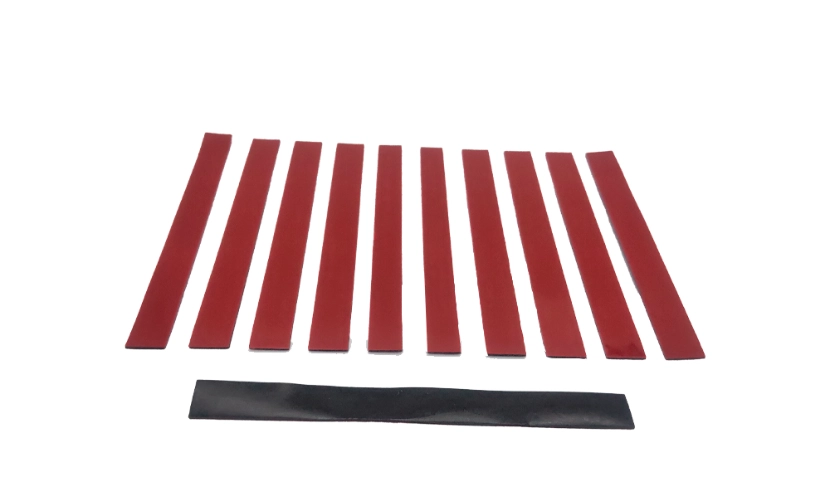
Acrylic adhesive is often selected for stronger and longer-lasting bonding. It usually performs better under heat, UV exposure, humidity, and outdoor aging. It is a good direction for metal, glass, painted panels, automotive trims, signs, and applications that need long service life.
Rubber Adhesive
Rubber adhesive usually gives quick initial tack. It grabs fast. It works well on many indoor surfaces. And it can be more cost-efficient for general bonding. It is common in packaging, paper, cardboard, light assembly, temporary mounting, and decoration.
Differential Adhesive Options
Some industrial projects involve two very different materials. One side may need strong bonding to metal. While the other side must stick to foam, fabric, or plastic. In this situation, differential adhesive tape can help. Each side uses a different adhesive behavior.
Match Tape Thickness to the Application
Thickness changes how the tape behaves. It affects appearance, gap filling, cushioning, and stress distribution. A thicker tape is not always stronger. A thinner tape is not always cleaner if the surface is uneven.
| Tape Type | Better Use | Main Advantage |
| Foam double sided tape | Uneven surfaces, panels, signs, trims | Gap filling and cushioning |
| Tissue double sided tape | Paper, packaging, light lamination | Easy processing and flexibility |
| Acrylic bonding tape | Long-term mounting, outdoor use | Stronger durability |
Foam Double Sided Tape
Foam tape handles more difficult surfaces. It can absorb small gaps. It can reduce vibration. And it can spread stress across the bonded area. This makes it useful for signs, panels, automotive accessories, decorative strips, and plastic-to-metal bonding.
Foam thickness should still be selected carefully. Too thick may affect appearance or positioning. Too thin may not provide enough contact or cushioning.
Check Bonding Strength and Load Requirements
Industrial bonding should be judged by real working conditions. Not only by how sticky the tape feels when touched by hand. Initial tack may feel impressive. But long-term holding power is a different matter.
Pay attention to these performance points:
- Peel adhesion
- Shear strength
- Tensile strength
- Holding power under static load
- Resistance to vibration or movement
If the bonded part is heavy, vertical, curved, or exposed to vibration, the tape needs stronger holding power. If the part is light and used indoors, a more economical tape may already be enough.
Before bulk orders, test the tape on the real material. Use the actual pressure, temperature, and curing time if possible. Small tests can prevent large losses later.
Consider the Working Environment
A tape that performs well in a clean indoor room may fail in a hot vehicle interior. It may also fail in a humid warehouse. Or in a dusty construction site. Or during outdoor sign installation. Environment changes adhesion behavior.
Indoor and Outdoor Use
Indoor bonding usually focuses on appearance, easy application, and stable holding power. Outdoor bonding needs more resistance to sunlight, rain, humidity, temperature change, and aging.
Outdoor applications often need acrylic adhesive or high-performance bonding tape. If the tape will face UV exposure or moisture, do not treat it as a general indoor tape.
Temperature Resistance
Heat can soften adhesive. Cold can reduce tack. Repeated temperature cycles may weaken the bond over time. Automotive parts, electronics, appliances, and outdoor panels often face these changes.
For these applications, check the recommended working temperature and service temperature. The tape should match the real environment. Not just room-temperature testing.
Dust, Oil, and Surface Contamination
Many bonding problems come from poor surface preparation. Oil, dust, water, release agents, and powder can block adhesive contact. Even a strong tape cannot work well on a dirty surface.
Choose Removable or Permanent Bonding
Some projects need temporary fixing. Others need a bond that stays in place for years. These two goals require different tape choices.
Removable double sided tape works for temporary displays, trade show materials, protective films, short-term positioning, and light mounting. Permanent double sided tape is better for trims, signs, panels, nameplates, electronic parts, automotive components, and long-term assembly.
Common Mistakes When Choosing Double Sided Tape
Many tape problems are avoidable. The most common mistakes include:
- Using indoor tape outdoors
- Applying thin tape to rough surfaces
- Ignoring plastic surface energy
- Skipping sample testing before bulk purchase
- Applying tape to dusty, oily, or wet surfaces
- Forgetting about heat, humidity, or vibration
- Choosing removable tape when permanent bonding is needed
A better selection process saves time. It also reduces complaints, rework, and material waste.
How QKD Tape Supports Industrial Bonding Applications
QKD Tape provides double sided tape solutions for industrial bonding, packaging, automotive parts, decoration, electronic assembly, and custom applications. Different projects may need foam tape, tissue tape, PET tape, acrylic tape, or customized specifications.
If your application involves special materials, outdoor exposure, high temperature, heavy parts, or difficult plastic surfaces, sample testing is the practical next step. QKD Tape can support tape selection and custom specifications based on real application needs. Contact us to discuss the right solution for your application.
FAQ
Q1: What is the best double sided tape for industrial bonding?
The best tape depends on the surface, load, environment, and bonding goal.
Q2: Can double sided tape bond metal and plastic together?
Yes, but the type of plastic is important. PE, PP, and some coated plastics may require special adhesives.
Q3: Is foam double sided tape stronger than thin double sided tape?
Foam tape is better for rough surfaces, gaps, and vibration. Thin tape is better for smooth, flat materials and low-profile assembly.
Q4: Can double sided tape be used outdoors?
Acrylic-based options with better moisture, UV, and temperature resistance work well here.
Q5: Why should samples be tested before ordering in bulk?
Sample testing confirms adhesion, thickness, removal behavior, aging resistance, and performance on the actual material before large-scale production.