
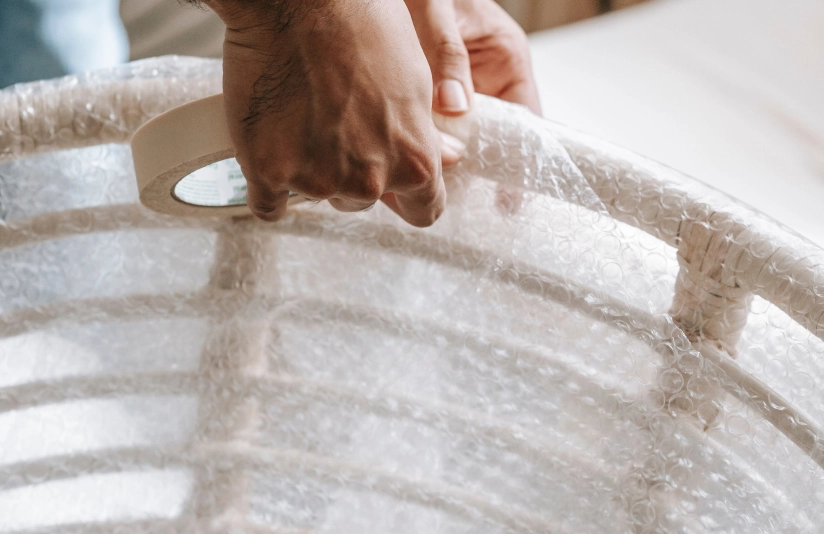
Polypropylene and polyethylene appear in housings, containers, automotive trim, appliance parts and countless molded components. They are light, inexpensive and chemically resistant. They are also frustrating to bond.
A tape can feel secure during assembly and begin lifting two days later. The problem is rarely “not enough glue.” It is usually poor adhesive wet-out, surface contamination or a tape that was never designed for low-surface-energy plastics.
Why Are PP and PE Plastics Difficult to Bond?
PP and PE typically have surface energies around 29–33 mN/m, although the exact value depends on the grade and additives. Many general-purpose adhesives cannot spread properly across such a low-energy surface. Contact may look complete while the actual bonded area remains limited.
Mold-release agents, oils and dust make the situation worse. Molded parts may also contain slip agents that migrate toward the surface after production.
This explains a familiar factory-floor problem: tape bonds well to a freshly cleaned PP housing during a trial, then starts lifting after several days. Cleaning removed the visible contamination. It did not change the plastic’s underlying surface chemistry—or stop additives from migrating.
HDPE, LDPE and PP should not be treated as one identical substrate. Colorants, recycled content and surface texture can all change the result.
Which Adhesive Tapes Work Best on PP and PE?
There is no universal “best tape.” The practical choice depends on load, temperature, exposure time and how quickly the assembly must be handled.
Modified Acrylic Tapes for Long-Term Bonding
Modified acrylic adhesives are usually the strongest starting point for permanent PP and PE assembly. LSE-specific formulations are engineered to wet out surfaces that conventional acrylic adhesives struggle to bond.
They generally provide better resistance to heat, UV light, moisture and aging than rubber-based systems. This makes them suitable for appliance components, automotive trim, control panels and outdoor parts.
Initial tack may not tell the whole story. Some modified acrylic tapes feel less aggressive during application but develop much higher bond strength after several hours. Firm pressure and adequate dwell time matter.
Rubber-Based Tapes for Fast Initial Adhesion
Rubber-based adhesives provide strong initial tack and can bond quickly to many untreated PP and PE surfaces. They work well in packaging, indoor displays, temporary assembly and applications where parts must be handled immediately.
The trade-off is durability. Heat, sunlight and long-term loading can soften or age a rubber adhesive. A tape that performs well on an indoor plastic bin may be a poor choice for an exterior automotive component.
For short service life and controlled indoor conditions, rubber-based tape is often the economical answer. For a ten-year assembly, probably not.
LSE Foam Tapes for Irregular or Curved Surfaces
An LSE foam tape combines a low-surface-energy adhesive with a conformable foam carrier. The foam fills small gaps, follows textured surfaces and distributes stress across the bonded area.
This construction is useful for plastic trims, signs, nameplates and curved molded components. It also reduces the effect of different thermal expansion rates between plastic and metal parts.
Foam thickness must be selected carefully. Too thin, and it cannot accommodate the gap. Too thick, and the assembly may move under load. Foam also cannot rescue an incompatible adhesive. The adhesive layer still needs to bond to the PP or PE.
| Tape type | Best suited for | Initial tack | Environmental durability | Main limitation |
| Modified acrylic tape | Permanent industrial assembly | Medium to high | High | May require more dwell time |
| Rubber-based tape | Indoor bonding and packaging | High | Low to medium | Limited heat and UV resistance |
| LSE acrylic foam tape | Curved or uneven components | Medium to high | High | Thickness must match the joint |
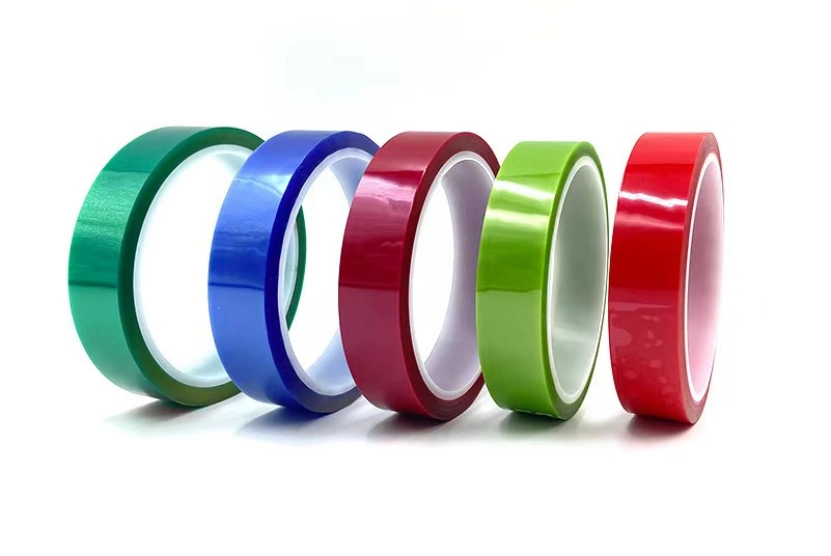
How Should You Choose a Tape for a Specific PP or PE Application?
Start with the actual plastic grade—not simply “a plastic part.” A tape tested on smooth virgin PP may behave differently on textured recycled PP containing fillers and release agents.
Check the conditions surrounding the bond:
- Static load, peel force and vibration
- Minimum and maximum service temperatures
- Indoor or outdoor exposure
- Contact with water, oil or cleaning chemicals
- Smooth, textured, flat or curved geometry
- Required service life
- Manual or automated application
Joint design deserves attention. A narrow strip wrapped around a curved component remains under continuous peel stress. A wider tape, thinner carrier or redesigned bonding area may improve performance more than switching to a nominally stronger adhesive.
How Do You Prepare PP and PE Surfaces for Tape Bonding?
Remove dust, grease and mold-release residue with a cleaner compatible with the substrate. A lint-free cloth and a suitable isopropyl alcohol mixture are commonly used, but the cleaning method should be checked on the actual plastic.
Allow the surface to dry. Apply the tape without touching the adhesive, then use firm, uniform pressure. Pressure-sensitive tape needs pressure—an obvious point that is often missed on fast assembly lines.
Do not load the joint immediately unless the tape is designed for it. Bond strength commonly develops as the adhesive continues to wet out the surface.
For difficult grades, an adhesion promoter, primer, corona treatment or plasma treatment may be required. Treated surfaces should normally be bonded soon afterward because treatment effects can decline over time. Abrasion alone is unreliable; it may simply create loose debris or smear additives across the surface.
How Can You Test the Bond Before Mass Production?
A thumb test only measures initial tack. It says little about resistance to heat, sustained load or aging.
Use production-grade PP or PE parts and reproduce the intended cleaning, pressure and dwell time. Then evaluate peel adhesion, static shear, edge lifting and environmental exposure. Curved assemblies should be tested in their assembled position.
One useful trial involved a PE label holder that passed a flat-panel peel test but lifted overnight after being attached to a curved container. The adhesive was acceptable. The stored peel stress was not.
Test multiple molded batches when possible. Variation in recycled content, additives or surface treatment can produce larger differences than expected.
Why Does Tape Still Fail After the Correct Product Is Selected?
Failure appearance usually provides a clue.
Immediate lifting suggests contamination, insufficient application pressure or poor adhesive compatibility. Edge lifting often points to curvature, tape tension or an undersized bonding area. Sliding under load indicates inadequate shear strength, excessive temperature or both.
Failure after several days is more complicated. Migrating additives, moisture exposure and premature loading are common causes. Inconsistent results across production batches may come from changing resin grades or mold-release practices.
More adhesive is not always the answer. A thicker coating may improve wet-out, but it can also increase movement under load. The substrate, adhesive and joint geometry need to work as a system.
What Is the Best Way to Find the Right PP or PE Bonding Tape?
Select candidates based on the plastic grade, operating temperature, load and expected service life. Then test them on real parts under realistic conditions.
Send QKD Tape your substrate type, operating temperature, load requirements and target dimensions. Our team can recommend a suitable adhesive construction and provide samples for application testing.
Frequently Asked Questions About Tapes for PP and PE
Q: Can Regular Double-Sided Tape Bond PP or PE?
It may hold temporarily, especially under light indoor loads. Permanent assemblies usually require an adhesive specifically formulated for low-surface-energy plastics.
Q: Is Primer Always Required?
No. Many LSE tapes bond untreated PP and PE successfully. Primer becomes useful when the substrate is especially difficult or the application involves high loads, heat or long service life.
Q: How Long Should the Bond Dwell Before Testing?
Follow the tape supplier’s technical data. Many pressure-sensitive adhesives gain strength gradually, so immediate testing can underestimate their final performance.