
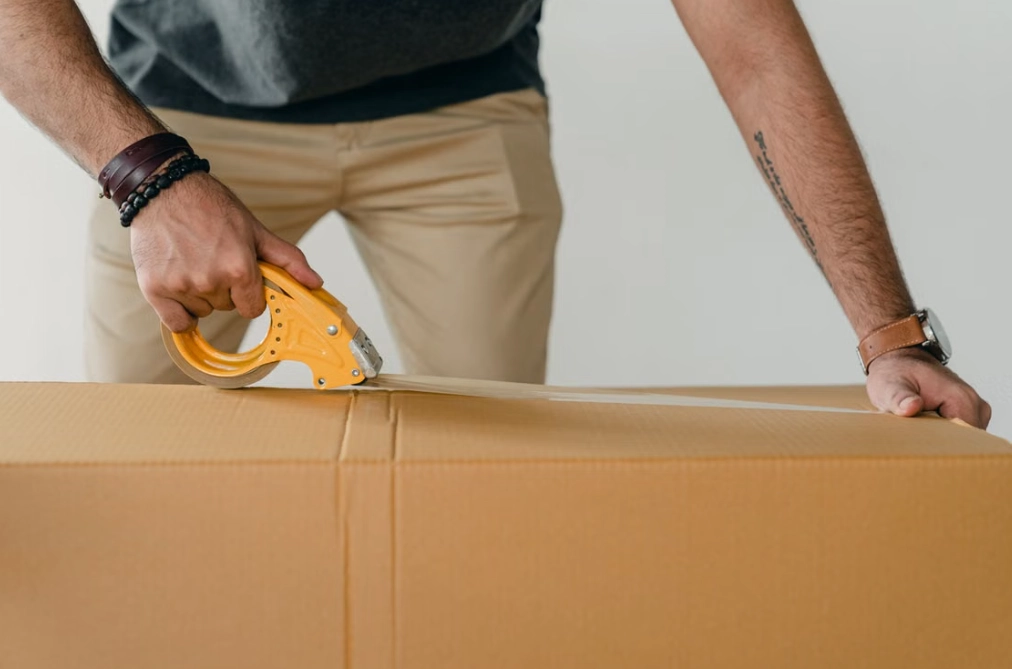
A heavy carton rarely fails neatly. One corner crushes. A flap lifts in a warm warehouse. The box survives packing, then splits when a forklift turns too sharply. Standard carton tape may still be attached, yet the package has lost its shape.
Cross weave filament tape is used when packaging needs reinforcement in more than one direction. It cannot repair a weak carton, but it can spread stress and keep seams from becoming failure points.
What Is Cross Weave Filament Tape and How Does It Work?
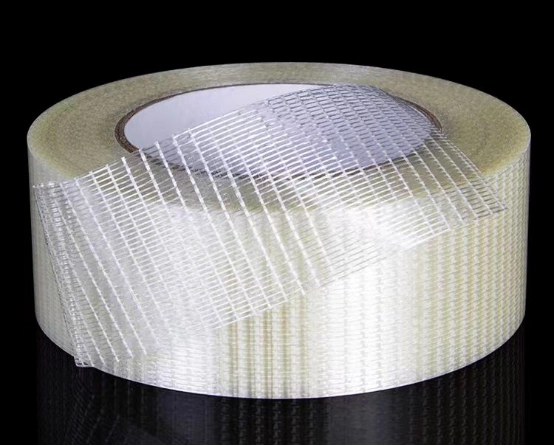
Cross weave filament tape combines a film backing, pressure sensitive adhesive, and fiberglass yarns arranged in the machine and cross directions. Those filaments resist lengthwise pulling and slow tears that begin at carton edges.
The backing is commonly PET or BOPP. Adhesive choice varies with the surface and temperature range. Once pressed firmly onto the package, the tape acts as a flexible reinforcement strip rather than a simple closure.
How Is Cross Weave Tape Different From Mono Filament Tape?
Mono filament tape is reinforced mainly in one direction. It suits straight bundling lines and loads pulling along the tape length. Cross weave tape adds transverse reinforcement, making it more suitable for cartons that distort or tear sideways.
| Tape type | Reinforcement direction | Typical use |
| Cross weave filament tape | Lengthwise and transverse | Heavy cartons, pallets, irregular loads |
| Mono filament tape | Mainly lengthwise | Bundling and straight seam reinforcement |
| Standard packaging tape | No fiberglass | Light and medium cartons |
Why Is Cross Weave Filament Tape Suitable for Heavy Packaging?
Heavy packages create mixed stresses. A 25 kg carton stacked several layers high bulges at the sidewalls, rubs against nearby cartons, and shifts during braking.
Cross weave tape helps where the risk involves:
- Seams opening under internal pressure
- Corners splitting during handling
- Bundles loosening after vibration
- Pallet loads shifting in transit
Tape cannot restore compression strength to wet, damaged, or overloaded board. Stronger tape may only delay failure.
Where Is Cross Weave Filament Tape Commonly Used?
The clearest applications are packages where movement is difficult to control and a small tear can grow quickly.
Heavy Carton Sealing and Reinforcement
Large appliance cartons, metal parts, pump components, and dense hardware are common examples. An H-seal across the center and edge seams can reduce flap lift. Extra strips may protect weak corners.
Carton failure often starts beside the tape, not through it. Wider tape or better placement may help more than a higher tensile grade.
Palletizing and Industrial Bundling
Cross weave tape can stabilize stacked cartons, bundle profiles, hold protective sheets, or secure components during internal transport. It is useful where strapping may mark a finished surface.
Several moderate tension wraps usually perform better than one tight wrap. Excess tension can crush corrugated board and create the deformation the tape was meant to prevent.
Export and Long Distance Transportation
Export packaging faces repeated handling, temperature changes, and long periods under compression. A carton may leave the factory square, then arrive with softened board, loosened tape, or rubbed edges.
Cross weave tape is often added around seams and load bearing points before pallet wrapping. QKD Tape’s cross fiberglass tape can be considered when standard tape is tearing or mono filament tape is not controlling sideways splits. What matters is whether the construction matches the carton, route, and expected stress.
How Do You Choose the Right Cross Weave Filament Tape?
Selection should begin with the observed failure. Broken tape, lifted edges, torn cartons, and shifted pallets are different problems.
Match the Tape to the Load and Failure Risk
Tensile strength matters, but it should not dominate the decision. Check:
- Package weight and carton dimensions
- Direction of load on the tape
- Filament density and tape width
- Adhesion to the actual surface
- Storage and transit time
A high tensile tape can still fail if the adhesive releases from dusty recycled board. A wider grade may perform better because it spreads stress over more surface area.
Match the Adhesive to the Surface and Environment
Virgin kraft liner, coated cartons, recycled board, plastic bins, and painted metal all bond differently.
Tape applied in a cold warehouse may show weak initial tack. A high tack adhesive used in summer heat may soften and creep. Dust, moisture, and rough fibers reduce contact area.
When discussing a project with QKD Tape or another manufacturer, provide both application and service temperatures. “Room temperature” says little about export packaging sitting in a container yard.
Confirm the Roll Format and Application Method
A suitable tape can still be awkward on the line. Confirm:
- Roll width and length
- Core size
- Hand or machine application
- Unwind force
- Dispenser compatibility
For OEM or ODM work, width, adhesive, backing, color, and packing format may be adjusted. Customization is useful only after the failure mode is understood.
How Should Cross Weave Filament Tape Be Applied?
Surface preparation is simple and often ignored. Remove dust, keep the board dry, and apply tape to a firm surface.
For carton reinforcement:
- Center the tape over the seam.
- Extend it onto both panels.
- Press along the edges, not only the middle.
- Add cross strips where bulging is expected.
- Avoid aggressive stretching.
- Test cartons after stacking and vibration.
A roller gives more consistent pressure than a quick pass by hand. On rough corrugated board, the difference is visible after a few hours.
What Common Mistakes Cause Filament Tape to Fail?
Several mistakes appear repeatedly:
- Choosing by tensile strength alone
- Testing on clean samples instead of production cartons
- Applying tape over dust or moisture
- Using narrow tape on a wide carton
- Pulling excessive tension around corners
- Ignoring low temperature tack
Another problem is changing the tape grade without recording the application method. Different operators can produce different results with the same roll.
How Should Buyers Evaluate a Supplier or Request Samples?
A useful sample request contains more than “send strong filament tape.” Include carton size, packed weight, surface material, current tape, failure photos, temperature range, application method, and shipment route.
Ask for a technical data sheet, test methods, and tolerance ranges. Values without methods are hard to compare.
For a QKD Tape sample evaluation, compare a cross fiberglass tape grade against the current tape on the same cartons. Pack both versions, leave them under load, then run a handling or vibration check. A side by side trial usually reveals more than a long specification sheet.
What Do Buyers Commonly Ask Before Ordering?
Q: Is Cross Weave Tape Stronger Than Mono Filament Tape?
Not in every measurement. Mono filament tape may provide very high lengthwise strength. Cross weave tape is more useful when tears or movement develop across the tape. Stress direction decides the better option.
Q: Can It Replace Plastic or Steel Strapping?
Sometimes, especially for carton reinforcement, light unitizing, and surface sensitive bundles. It should not automatically replace rated strapping on very heavy or hazardous loads. The complete package must be tested.
Q: Can Cross Weave Filament Tape Be Customized?
Yes. Width, length, backing, adhesive, color, printing, and packing format may be adjusted, depending on production requirements and order quantity. QKD Tape can review these details when a standard grade does not fit the carton, environment, or equipment.
Conclusion
Cross weave filament tape works well when a package fails from mixed direction stress rather than simple seam opening. Identify the failure, choose the adhesive and reinforcement around it, then test the finished package—not just the tape. A short, documented trial usually shows whether the construction belongs on the packing line.