
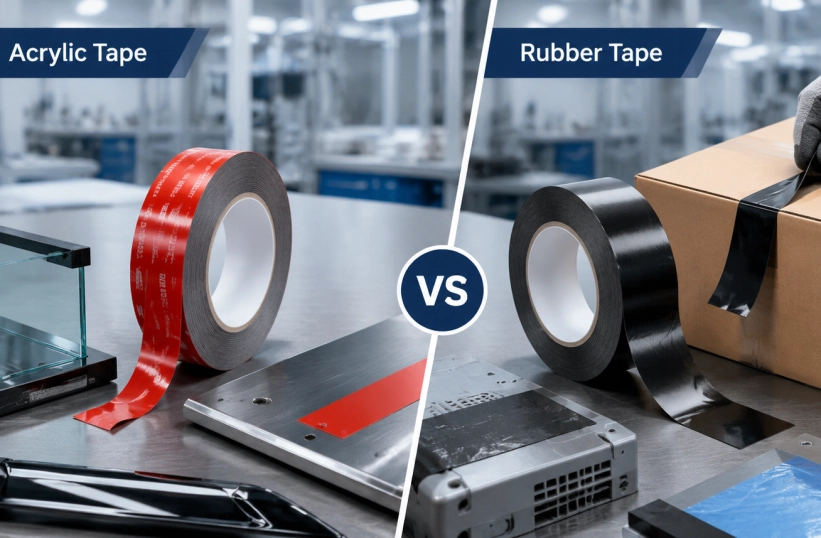
Adhesive tapes help a lot with bonding, sealing, mounting, and protecting parts in many industries. They mix carrier materials like foam or film with pressure-sensitive adhesives, or PSAs. This creates flexible options for both short-term and long-term jobs. Different adhesive types, such as acrylics and rubbers, get made to fit exact needs. Picking the right tape affects how long products last, how fast assembly goes, and overall reliability down the road.
Acrylic vs Rubber Adhesive Tapes: Key Differences
Acrylic adhesives stand out for their strength over time, good UV resistance, and steady bonding even in tough spots. Rubber-based ones give strong initial stick and grab surfaces fast. The big difference comes down to lasting performance versus quick grip. Knowing this helps when you decide what fits your industrial needs.
Characteristics and Performance of Acrylic Adhesive Tapes
Before we look at where they get used, let’s see what makes acrylic systems special among industrial adhesives.
Chemical Composition and Bonding Mechanism
Acrylic adhesives come from acrylate polymers. These give steady results for a long time. The polymers create solid bonds with metals, plastics, glass, and painted surfaces. Their makeup fights oxidation pretty well. They keep holding even with heat or chemicals around. This lets them work fine outdoors or in hard conditions where others might let go.
Advantages of Acrylic Foam Tape in Industrial Use
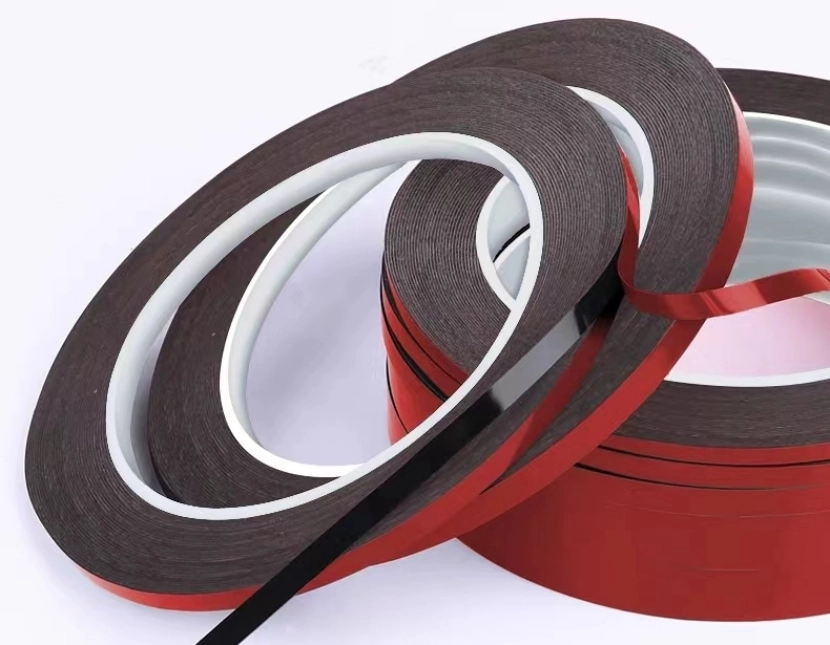
Acrylic foam tape really shines. It brings together solid strength and some bend. The foam core spreads stress evenly across the joined areas. That cuts down on joint breaks. It handles high heat and UV light well. So it works great for outdoor or heavy jobs like car exteriors or solar panel setups. The tape stays stuck even with moisture, solvents, or temperature changes. This makes it perfect for permanent bonds that need to hold up for years.
| Property | Acrylic Foam Tape Performance |
| Temperature Resistance | Up to 150°C continuous |
| UV Stability | Excellent |
| Moisture Resistance | High |
| Typical Lifespan | 10+ years (depending on environment) |
Typical Applications of Acrylic-Based Tapes
Acrylic-based tapes see wide use in several areas.
- Automotive body trim attachment and emblem mounting.
- Electronic device assembly that needs vibration damping or insulation.
- Construction jobs such as glass panel bonding or façade attachment systems.
They can replace screws and bolts. This saves weight and gives designers more room to work. Factories like that a lot.
Characteristics and Performance of Rubber-Based Adhesive Tapes
Rubber-based adhesive systems focus on other things: speed, lower cost, and easy use during production.
Composition and Adhesion Properties
These adhesives use natural or synthetic rubber mixed with resins that boost stickiness. They grab right away on rough or porous surfaces. No long wait for curing. Still, they fit best for short jobs or indoor spots. Outdoor exposure is limited because rubber can break down under UV light or strong heat.
Benefits of Using Rubber-Based Tape in Industry
The main plus is excellent initial tack. That works well on fast production lines where quick stick matters more than years of hold. It does good on low-energy surfaces like polyethylene films or cardboard. Plus, it costs less for temporary bonds or basic sealing tasks.
Common Industrial Uses of Rubber Adhesive Tapes
You see rubber adhesive tapes in practical spots like:
- Packaging lines that need fast seals during high-speed runs.
- Electrical insulation for short-term protection in maintenance.
- Masking and surface protection while painting or finishing.
People pick them when easy removal or reuse is key.
Acrylic vs Rubber Adhesives in Industrial Contexts
When you compare the two, some technical points decide which one wins in certain conditions.
Environmental Resistance and Durability Comparison
Acrylic adhesives hold up better against UV light, heat, moisture, and chemicals than rubber ones. Rubber can wear out quicker in sunlight or high heat because its parts oxidize. So for long outdoor use, acrylic usually wins thanks to better weather resistance.
Temperature Range and Performance Stability
Acrylic foam tapes work across wide temps—from very cold to steady high heat—without losing grip. Rubber-based tapes give fast adhesion at normal room temps. But they lose stick when things get hot or stay warm too long.
| Parameter | Acrylic Foam Tape | Rubber Based Tape |
| Operating Temperature Range | -40°C to +150°C | 0°C to +70°C |
| UV Resistance | Excellent | Poor |
| Initial Tack | Moderate | Very High |
| Long-Term Durability | Superior | Limited |
Surface Compatibility and Application Flexibility
Rubber adhesives stick well to rough or uneven stuff like cardboard, cloth, or raw wood. Their softer feel helps them flow in. Acrylic adhesives do better on smooth metals, glass, composites, and painted plastics. Those show up often in cars or electronics.
Factors to Consider When Choosing Between Acrylic and Rubber Adhesive Tapes
Choosing means balancing the surroundings, cost, and how strong the bond needs to be.
Evaluating Application Environment Conditions
Check humidity, how much sun hits it, temperature swings, and chemical contact. For example, outdoor signs or mounting get sunlight, so acrylic foam tape is safer because it handles weather better.
Assessing Required Bond Strength and Lifespan Expectations
If the job needs permanent hold—like metal trim on vehicles—acrylic foam tape lasts longer thanks to its strong polymer structure. But for short holding, like bundling packages before shipping, rubber-based adhesive is practical and cheaper. It still keeps the line moving.
Balancing Cost Efficiency with Performance Requirements
Acrylic tapes cost more at first. Yet they need less fixing later since they resist wear. Rubber options save money when use is short, like in masking. They don’t slow down factory work.
QKD Tape’s Expertise in Industrial Adhesive Solutions
In busy manufacturing today, good access to special adhesive tech keeps quality steady across many jobs. QKD Tape makes a full range of acrylic foam tapes and rubber based tape solutions. They fit automotive lines, electronics work, construction glazing, and packaging. Each line follows international quality standards. So they perform well from humid coastal areas to dry factory zones.
The company keeps investing in research on polymers. This matches new needs like lighter cars or smaller electronics. Strict checks on every batch make sure adhesion stays reliable. Users can count on consistency and safety. Contact us today to discuss your adhesive requirements and choose the right tape solution for your production environment.
FAQs
Q1: What is the main difference between acrylic foam tape and rubber based tape?
Acrylic foam tape gives long-term durability under tough conditions. Rubber based tape offers faster initial adhesion for short-term uses.
Q2: Can rubber based adhesive tapes be used outdoors?
They can work for a short time outside. But they break down faster under UV light or heat than acrylic choices.
Q3: Why do manufacturers prefer acrylic foam tape for automotive applications?
It fights vibration, water, temperature changes, and keeps strong bonds for many years without extra fasteners.
Q4: Which type of adhesive performs better on rough surfaces?
Rubber based tape usually sticks better to porous or textured materials like cardboard or fabric. Its softer makeup helps.
Q5: Are there cost differences between acrylic foam tape and rubber based options?
Yes. Acrylic ones usually cost more at the start but last longer. Rubber types are cheaper upfront and meant for shorter tasks.