

Most adhesive tape in a vehicle disappears after assembly. It remains behind dashboards, inside doors, around groups of wires, under trim pieces, and between joined surfaces.
In production, tape protects wiring, reduces vibration, masks painted areas, seals gaps, and replaces mechanical fasteners where screws or clips add weight or complexity. The useful question is where each tape type performs best.
1. Bundling and Protecting Automotive Wire Harnesses
Modern vehicles use a lot of wiring. It runs through dashboards, doors, floors, and engine compartments. These cables need to stay organized. They also need protection from rubbing and constant movement.
Automotive wiring harness tape holds the bundle in place. It adds a strong outer layer at the same time. People often pick PET cloth tape when they need good resistance to wear and plenty of flexibility. PET fleece tape is common in interior zones where contact noise needs control. PVC harness tape can be useful when flexibility and insulation are priorities.
A dashboard harness may bend around brackets and pass close to plastic trim. Too much stiffness complicates installation; poor protection can turn rubbing into a long term reliability issue.
Tape unwind force matters too. A suitable tape can still be inconvenient if it slows manual or automatic wrapping.
2. Electrical Insulation and Cable Protection
PVC electrical tape sees wide use around cable joints, wire splices, terminals, and harness sections. These spots need extra insulation.
Stable adhesion matters. So do flexibility, dielectric performance, temperature resistance, and abrasion resistance. The exact location changes the needed specification. Tape behind interior trim faces one set of conditions. Tape near heat generating components faces another.
Flexibility also matters. Harness workers often wrap small diameter cables and irregular branch points. Tape that is too stiff can lift, wrinkle, or require excessive tension.
Initial tack alone says little about long term performance. Automotive electrical tape should continue to hold after temperature cycling and vibration.
3. Mounting Interior Trim and Components
Double-sided automotive tape is commonly used for decorative trim. It is used for dashboard parts. It is used for foam pads. It is used for nameplates. It is used for lightweight panels. It is used for small accessories.
It avoids visible fasteners. It can reduce drilling. It can reduce clips. It spreads stress across the bonded area.
Acrylic foam tape is useful when two surfaces are not perfectly flat. The foam layer can compensate for small gaps. These gaps are between plastic, metal, or foam components.
Surface preparation often decides the result. Dust can reduce bond strength. Oil can reduce it. Mold-release agents can reduce it. Low-surface-energy plastics can reduce it. Many apparent tape failures begin before application.
The bond should be judged together with substrate type, assembly pressure, dwell time, and service temperature.
4. Attaching Exterior Trim, Emblems and Moldings
Exterior applications place more stress on adhesive tape. They place more stress than most interior installations.
Badges may face rain. Side moldings may face rain. Decorative strips may face rain. They may face car-wash chemicals. They may face sunlight. They may face freezing temperatures. They may face vibration. They may face thermal expansion. Double-sided acrylic foam tape is often chosen. It combines strong bonding. It also offers some ability to absorb movement. The movement is between dissimilar materials.
Consider a plastic molding attached to a painted metal door. Plastic and metal expand differently as temperature changes. A rigid joint can concentrate stress. A foam adhesive layer can absorb part of that movement.
Thickness should match the gap. It should match the load. It should match the surface geometry. It should match the required bond-line flexibility. More thickness does not automatically mean a stronger assembly.
5. Masking During Automotive Painting and Coating
Masking tape performs a simple task. Yet painting operations quickly show any weaknesses in the tape.
Automotive masking tape protects adjacent surfaces from primer, paint, coatings, and overspray. It also helps create clean paint lines around body panels, components, and trim areas. Temperature resistance is critical. A tape may hold at room temperature but leave residue after a heated paint cycle. Another may remove cleanly yet lift during spraying.
Masking paper tape and Washi paper tape are common where conformability and clean removal matter. Pre-taped masking film can speed coverage of larger areas.
Residue is not a minor issue. Cleaning adhesive from a finished painted part creates costly rework.
6. Sealing Against Water, Dust and Moisture
Certain automotive joints need a flexible seal instead of a strong structural bond.
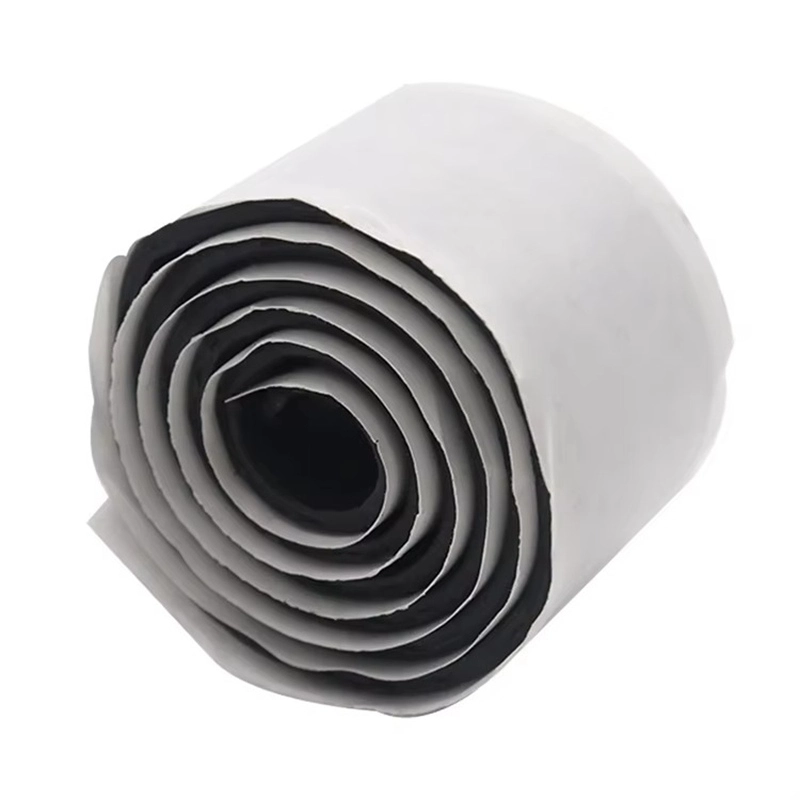
Butyl tape works around seams, lamp assemblies, gaps, and similar spots that must stay dry. Its soft, conformable structure helps fill irregular surfaces and maintain contact under vibration.
Headlamp sealing is a familiar example. The joint must resist water entry while tolerating temperature changes and movement between parts. A sealant that becomes too rigid can lose contact as the assembly shifts.
Butyl tape can simplify some assembly and repair work because it avoids dispensing equipment or curing time.
A sealing tape should be specified for sealing behavior, not simply because it feels sticky.
7. Reducing Noise, Vibration and Harshness (NVH)
Wire harnesses and small parts can produce noise. They do this when they touch plastic or metal surfaces again and again.
The problem may not appear during initial inspection. Months of road vibration can turn a small contact point into an audible rattle.
PET fleece wire harness tape is often used in dashboards, doors, pillars, and seat areas because its soft surface helps reduce friction and impact noise. PET cloth tape can provide more abrasion resistance where the harness also needs mechanical protection.
NVH problems rarely have one universal solution. Sometimes a short wrapped section at the correct contact point is more effective than adding material across the entire harness.
That precision is one reason tape remains useful in vehicle interiors.
How to Choose the Right Adhesive Tape for Automotive Manufacturing
Tape selection should begin with the application conditions.
Check:
- substrate
- operating temperature
- vibration
- abrasion level
- required adhesion
- tape thickness
- width
- application method
A tape that works for interior trim may be unsuitable for an engine compartment harness. Production conditions matter too. Manual wrapping, automatic wrapping, die cutting, and high speed assembly place different demands on tape. For OEM and Tier suppliers, standard dimensions are not always enough. Width, roll length, backing, adhesive strength, color, core size, and packaging may need adjustment.
QKD Tape supplies automotive tape products and custom solutions for global B2B customers. For projects with special needs, it makes sense to discuss the application before you set final specifications.
Conclusion — Find the Right Automotive Tape Solution
Adhesive tape in automotive manufacturing is more than a consumable. It can reduce assembly steps, protect wiring, control noise, improve sealing, and simplify mounting. The challenge is matching the tape to real operating conditions.
Need an adhesive tape matched to your automotive application?
Contact QKD Tape to discuss tape material, adhesive performance, dimensions and OEM/ODM requirements.
FAQ
Q: What type of tape is commonly used for automotive wire harnesses?
PET cloth tape, PET fleece tape, PVC wire harness tape, and other specialized harness tapes are common choices.
Q: Can double–sided tape replace mechanical fasteners in automotive assembly?
In some applications, yes. It is widely used for trim, emblems, moldings, foam parts, and lightweight components. Load, substrate, temperature, and environmental exposure should be checked before replacing mechanical fasteners.
Q: What tape is suitable for automotive painting?
Masking paper tape and Washi paper tape are common options.
Q: Why is fleece tape used in vehicle interiors?
PET fleece tape helps reduce friction and rattling. It does this where wiring harnesses contact panels or nearby components. This is especially true around dashboards, doors, and pillars.
Q: Does QKD Tape provide custom automotive adhesive tape?
Yes. QKD Tape supports OEM and ODM solutions, including custom width, roll length, backing materials, adhesive properties, color, and packaging.