
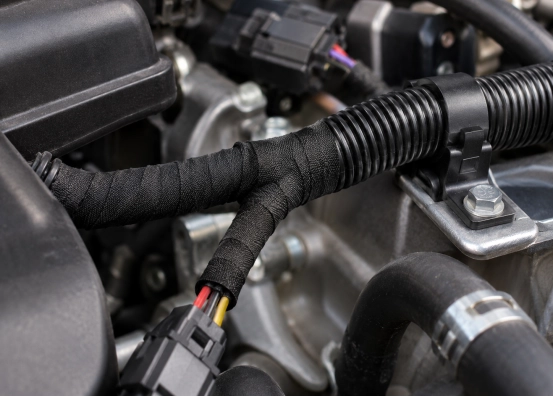
The main role of wire harness tape is to bundle wires whereas split loom tubing adds further outer protection in engine bay locations exposed to heat, vibration, oil, moisture and abrasion. Many routes use both materials.
What Is Automotive Wire Harness Tape?
The adhesive coating on the harness tape’s backing is used to wrap insulated wire bundles together.
Common Types of Wire Harness Tape
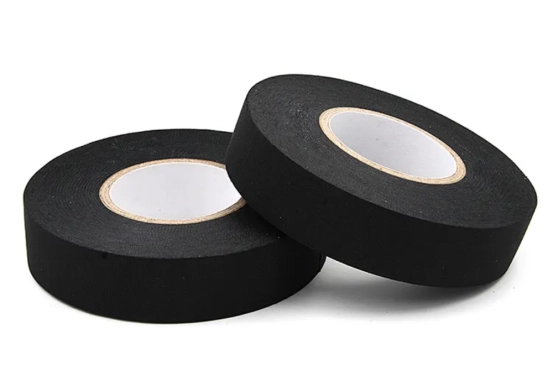
There are several different types of wire harness tape: PET cloth tape for bundling wires and abrasion protection, PVC tape for bundling and for insulation where electrically rated, PET fleece wire harness tape for noise reduction and other applications where contact noise is a problem, and acetate cloth tape for specific applications such as wrapping around wire harnesses.
Main Functions of Wire Harness Tape
Tape has several functions. First, it can bundle wires together. Then, it can limit wire movement. Surface protection is another function of wire harness tape. In addition, harness tape can reduce noise, depending on the backing of the tape.
What Is Split Loom Tubing?
Split loom tubing is flexible corrugated tubing with a lengthwise slit.
Structure and Materials of Split Loom
This flexible tubing has a lengthwise slit allowing wires to pass through the side of the tubing without having to unplug connectors. Split loom tubing is made in various service grade materials, such as Polyethylene, Polypropylene and Nylon.
Main Benefits of Split Loom
Split loom tubing protects against external rubbing and offers some protection against pinch. Although it has a slit in it to allow repair to wire harnesses without having to disconnect connectors, split loom tubing is not watertight. It can be clipped and attached to other parts to route harnesses.
Wire Harness Tape vs Split Loom: Key Differences
| Comparison | Wire Harness Tape | Split Loom |
| Structure | Adhesive backing | Corrugated tube |
| Main function | Bundling and wrapping | Outer mechanical protection |
| Flexibility | Closely follows branches | Limited by bend radius |
| Abrasion protection | Depends on backing | Barrier against external contact |
| Noise reduction | Selected cloth and fleece grades | Depends on fit and mounting |
| Installation | Wrap around wires | Insert through slit |
| Maintenance | Unwrap covered sections | Reopen slit |
| Best application | Branches and local wrapping | Exposed cable runs |
Which Offers Better Protection?
Suitable loom can offer better external contact protection than ordinary wrapping tape. Neither covering makes sharp edges, wire crushing or exhaust heat acceptable routing conditions.
Which Is Better for Engine Bay Routing?
When Wire Harness Tape Is the Better Choice
PET cloth wire harness tape will follow very tight turns in branches and wrap around wires in very confined spaces – just make sure to leave space for any connector locks.
When Split Loom Is the Better Choice
Use loom as an outer wear barrier on exposed wire runs. Secure the covered run with clearance from brackets and moving components.
Consider Engine Bay Temperature
Bear in mind that temperatures vary along a wiring route. The continuous temperature, as well as the peak temperature, the adhesive of the tape will bear, any fluid exposure and the requirements of your OEM must all be checked for the correct grade.
Can You Use Wire Harness Tape and Split Loom Together?
Benefits of Combining Both Solutions
Incorporate wire harness tape into the wire bundles within the loom. This allows use of the wire harness tape at the ends of the harness or at specific transitions as required while keeping inspection points accessible.
A Practical Example
Cloth tape is used to protect a sensor branch fork and the longer exposed section of wire is covered by the split loom. Ensure the tube exit edge cannot rub the wires, secure the run with clips, and allow for specified movement.
How to Choose the Right Wire Harness Protection Solution
1. Temperature Resistance
The backing and adhesive must also be able to withstand continuous and peak temperatures for the required amount of time.
2. Abrasion and Mechanical Protection
The interface to any mechanical parts (such as brackets, duct work etc) must be examined for abrasion and indeed all high wear points. Adequate clearance and grommets or even guards must be allowed where simple wrapping is likely to fail.
3. Chemical and Fluid Resistance
And remember, heat resistance is not the same as fluid resistance. You need to check what kind of oil, coolant, fuel, and cleaners will be in contact with the wires and tubing and choose your protection accordingly.
4. Flexibility and Installation Space
Allow space for bends, branches, connectors, and the final covered harness diameter.
5. Maintenance Requirements
Keep access for repairs. Define the environmental requirements first, followed by the protection requirements. Then you can pick the suitable materials for wire harness tape and split loom tubing.
Best Practices for Installing Wire Harness Tape and Split Loom
Surface Preparation
Surfaces should be free of dirt and grease; use a cleaning method compatible with wire insulation. Adequate time should be allowed for surfaces to dry after cleaning.
Proper Tape Wrapping
Maintain even tension and the specified overlap; avoid excessive stretching. Be sure to press both ends of tape firmly against the wire for a good bond.
Correct Split Loom Installation
When installing the tubing make sure to size it without overfilling it. Do not force the slit apart to fit the bundle. Also protect any cut edges and exits from the tubing and secure the harness with wire harness clips. Do not overtighten the clips.
Final Inspection
Check for any loose tape, exposed wires or rubbing points and ensure there is sufficient clearance from any hot or moving parts within the full movement of the part.
Why Choose QKD Tape for Automotive Wire Harness Applications?
QKD Tape supplies PET cloth, PET fleece, PVC and acetate industrial adhesive tapes to manufacturers and distributors of wire harnesses worldwide. QKD Tape offers custom tape manufacturing under OEM/ODM terms for wire harness tape. Discuss tape backing, adhesive, width, thickness and color with your QKD Tape representative. Also discuss the routing conditions and any special tests required. Evaluate samples for temperature, abrasion and fluid resistance prior to production.
Use wire harness tape to keep wires tidy. Split loom adds outer mechanical protection. For help selecting a suitable tape for your particular application, contact QKD Tape with your operating conditions and sample requirements.
Frequently Asked Questions (FAQs)
1. Can Wire Harness Tape Replace Split Loom?
It may be sufficient to use wire harness tape for bundling wires and providing light surface protection. However, for substantial pinching or abrasion, suitable tubing or other protection has to be used. This has to be decided from case to case.
2. Is Split Loom Enough to Protect Engine Bay Wiring?
Some engine bay routes can use split loom alone, whilst others will require supplementary protection in the form of wiring tape, wiring clips, wiring grommets or heat protection. Beware of water penetration via the slit in the tubing material.
3. What Is the Best Tape for Engine Bay Wiring?
There are a number of different types of automotive wiring harness tapes which would need to be evaluated against factors including temperature, wear, fluid, etc. with the appropriate grade selected based on the requirements of your OEM.