
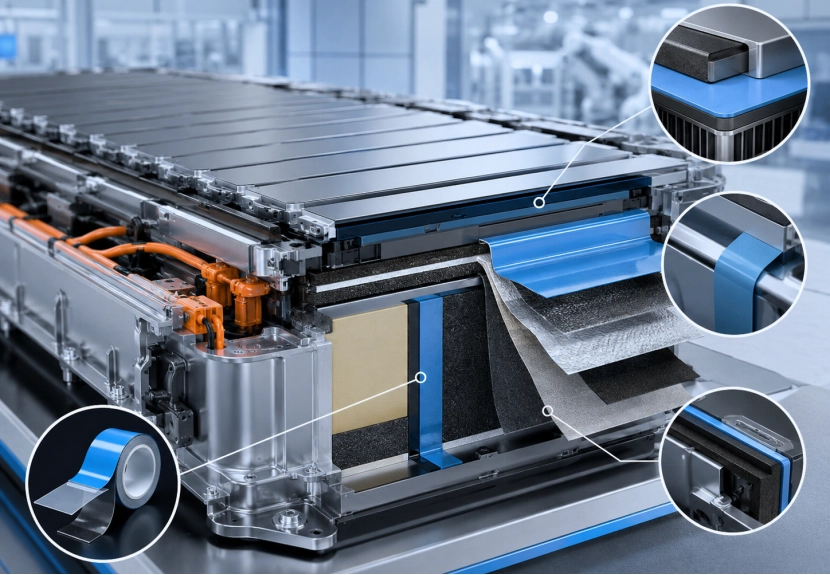
Electric vehicle (EV) batteries are becoming more compact, light, and efficient. Behind this growth, a quiet change is happening through the rising use of industrial adhesive tape. These tapes do more than just replace screws or bolts. They act as vital parts that impact safety, work output, and factory efficiency. By using them, battery packs become easier to put together. They also stay cooler and gain better defense against shakes and wetness.
Why Are Adhesive Tapes Essential in Electric Vehicle Battery Packs?
As EV layouts move toward better energy storage and less bulk, old ways of joining parts like welding or metal clips can limit new ideas. Industrial adhesive tape solutions fill this gap as multipurpose tools. They can bond, insulate, seal, and shield all at once. This helps save room and cuts down on total mass.
How Do Tapes Contribute to Battery Performance and Longevity?
Unique thermal management tapes control how heat moves between cells and cooling plates. By spreading heat out evenly, they stop hot spots that can ruin cell chemistry.
Protective films act as a wall against dust, water, and dirt. These are vital for keeping electrical resistance high and stopping rust. Structural bonding tapes have another job. They keep modules steady when the car hits bumps or shakes on the road. They do this without being too stiff, which prevents parts from cracking under pressure.
| Tape Function | Primary Benefit | Example Use |
| Thermal Management | Even heat dissipation | Between cells & cooling plates |
| Electrical Insulation | Prevents voltage leakage | Between conductive layers |
| Structural Bonding | Absorbs vibration & shock | Cell-to-cell bonding |
| Protective Film | Blocks dust & moisture | Outer module sealing |
Application 1: Cell to Cell Bonding and Spacing
When looking inside a battery module, each cell must stay in the right spot to work well. This is where adhesive tapes become very important.
Ensuring Secure Cell Alignment
Double-sided industrial adhesive tape keeps cylindrical or pouch cells in place during the build. They keep the gaps between cells even. This means every cell stays at a similar temperature, which is a big help for making the pack last longer. Materials with high dielectric strength also act as blocks between cells. They stop short circuits even if there is a sudden jump in voltage.
What Type of Tape Works Best for Cell Bonding?
Acrylic foam tapes are a top pick because they stick hard but stay flexible. They can handle the way parts grow or shrink as temperatures shift without letting go. Heat-proof adhesives ensure the bond stays strong through the big temperature changes EVs face. This includes everything from freezing winter charging to fast driving on hot days.

Application 2: Electrical Insulation and Shielding
Once parts are bonded, they need protection from the electricity itself. This is a major worry in high-voltage packs.
The Role of Insulating Tapes in High-Voltage Safety
Insulating tapes made of polyimide or polyester create a shield between parts that carry power, such as busbars. Their fire-resistant design helps them meet global safety rules like the UL 94 V-0 standard. Shielding tapes made from copper or aluminum foil also cut down on electromagnetic interference (EMI).
How Does Proper Insulation Improve Battery Reliability?
Good insulation stops power from leaking out. Such leaks could cause uneven power flow or create dangerous heat in one spot. When power moves steadily, the battery charges and drains the same way across all parts. This is a goal for every car maker wanting a dependable product.
Application 3: Thermal Management Solutions
Handling heat is a tough part of EV design. Heat changes both how safe the car is and how far it can go.
Managing Heat Within Battery Modules
Thermal interface adhesive tapes fill tiny air gaps between the cells and the metal cooling plates. This improves how well heat moves away from the cells. Some newer types use phase-change materials. These soak up extra heat when charging is at its peak and let it out slowly later. This process helps keep the thermal load balanced.
Why Is Thermal Control Critical for EV Batteries?
Too much heat makes the battery wear out faster and hold less power over time. If heat cannot escape, charging might also slow down. This happens because the car’s computer limits the power coming in to stay safe. With the clear heat paths made by these tapes, batteries stay at the best temperature even during hard use.
Application 4: Structural Reinforcement and Vibration Damping
Besides sticking or insulating, industrial adhesive tape helps make the battery pack physically tough.
Enhancing Mechanical Stability with Industrial Tapes
Reinforcing tapes make module boxes stronger by spreading out physical stress. This is better than putting all the pressure on a few bolts or welds. Vibration-damping adhesives act like a cushion for fragile parts like sensors. They protect them from the shocks of bumpy roads or fast starts.
What Makes a Tape Suitable for Structural Applications?
A good structural tape needs both pulling strength and a bit of stretch. It must give a little under stress but then return to its shape without peeling off. These tapes work well with aluminum, steel, or plastic covers. This ensures the bond stays firm no matter what material the battery box is made of.
Application 5: Sealing, Protection, and Identification Layers
Battery packs face tough conditions. Water, salt, and dirt can cause damage if the pack is not sealed tight.
Protecting Battery Modules from Environmental Factors
Sealing tapes close the gaps around lids or where cables enter. This keeps out dust and moisture. Some types can even stand up to chemicals like coolants used in the factory. Protective layers also wrap around wires to stop them from rubbing and wearing down over time. This small step prevents big repair jobs later.
How Are Tapes Used for Labeling and Identification?
Tracking a battery is important from the day it is made until it is recycled. Adhesive films that can be printed on allow makers to put QR codes or numbers right on the parts. These labels do not peel off in the heat. They stay easy to read for many years, even inside the harsh environment of the pack.
Why Partner with QKD Tape
QKD Tape works side-by-side with car makers to find the best tape for every part. This includes everything from cell bonding to EMI shielding. Our in-house R&D team ensures every roll of tape is made to the same high standard. The technical team at the company helps customers during the testing phase.
We also help fit these products into large factory lines without any trouble. This mix of custom work and expert help makes it easy for makers to keep up with new battery needs while keeping costs low. Contact us to discuss the right tape application for your next EV battery project.
FAQs
Q1: What kind of tape is used inside electric vehicle batteries?
Common types include acrylic foam, polyimide for insulation, thermal interface materials, and films for protection.
Q2: How do adhesive tapes improve EV battery safety?
They offer electrical insulation, keep cells lined up, move heat away, and cushion parts from shakes. All of this makes high-voltage packs safer.
Q3: Can industrial adhesive tape replace welding in battery assembly?
Yes, in many spots. It cuts weight and makes the build process simpler while still holding parts together very strongly.
Q4: Why is thermal management important for lithium-ion batteries?
Good heat control stops the battery from getting too hot. Overheating can damage the cells or slow down fast charging.
Q5: Are these specialized tapes resistant to chemicals or moisture?
Yes. Many sealing tapes are built to handle car fluids like coolants and stay strong in humid air over the car’s whole life.